

caTEGORIES
Tags
The Manufacturing Secrets Behind Lock Nuts vs Wing Nuts Production
Posted: May 29, 2026
Categories: News
In the tough field of factory setup, the dependability of a complete item usually rests on the tiniest pieces. Locating a nuts factory that puts care before just quantity marks the initial move to secure build firmness. Needs go beyond a basic provider. Instead, a teammate who mixes solid output with solid know-how proves essential. Here Qewit stands out. Set up in 2004 as a full British-owned company, it has worked years to improve the “Supply Chain Management” of factory goods from central China and nearby areas. Mixing “Western Style” work rules with “Far Eastern Value,” it builds a setup to please buyers via focused account care and strict quality checks. Holding more than 30,000 item types, it delivers a fair-price aid that meets needs, however unique, with safe packing and steady sends.
How Does a Nuts Factory Master Lock Nut Security?
Making lock nuts differs greatly from plain hex nuts. The aim centers on building “prevailing torque.” Modern plants use focused machine steps to make sure the nut fights slack even amid strong shakes. Standard parts depend only on squeeze power. Lock nuts add traits that “hold” the pin screw. This calls for firm follow of world rules like DIN and ISO.
Specialized Lock Nut Manufacturing Process for Vibration Resistance
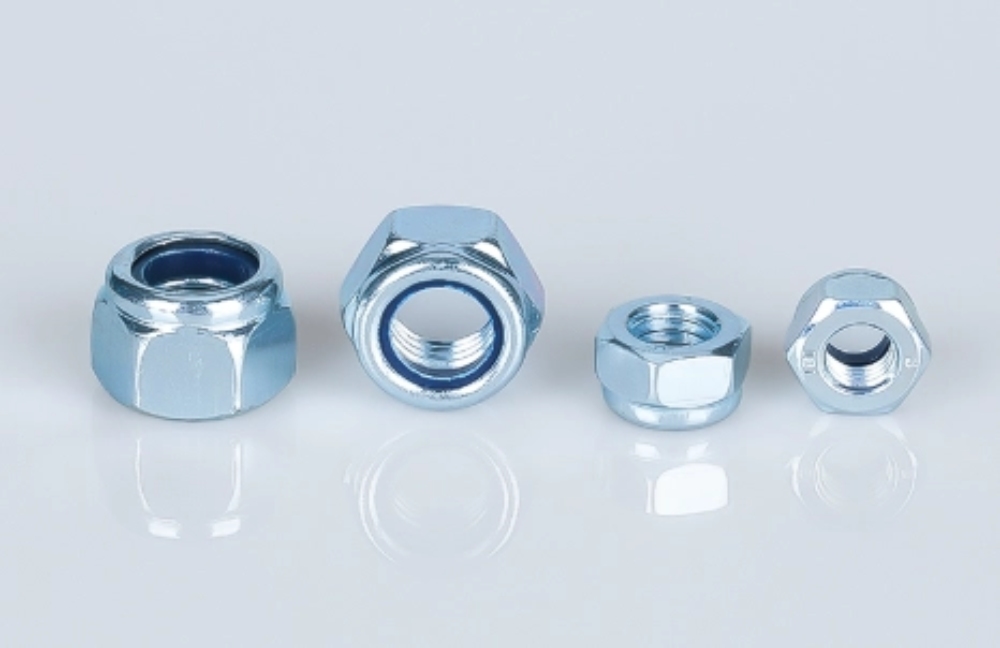
A solid nuts factory applies a specialized lock nut manufacturing process for vibration resistance to fix the usual problem of tie slack. For full-metal kinds, this frequently means “crimping” or bending the upper screws of the nut to form an oval shape. When turned onto a pin, the tight match builds strong rub. Such steps demand exact control. Excess bend makes the setup lock up. Too small a change offers no guard. For a steadier way, the Metric Type T Nylon Insert Nuts DIN 985. These build steady setup turn without harm to the pin’s outer coat. Thus, they suit hit-strong spots.
Advanced Nylon Insert Lock Nut Assembly and Testing
The advanced nylon insert lock nut assembly and testing step shows where care counts most. Here, a nylon loop fits into a slot at the nut’s top. During tightening, the pin screw presses into the nylon. This forms a firm, bendy match that builds steady rub push. To confirm work, each group faces firm “Proof Load” and “Vickers Hardness” checks. Such tests make sure the nylon stays put in the slot. A spin flaw would make the hold useless.
High Precision Nuts Factory Solutions for Complex Fastening
When setup needs surpass a basic nut, high precision nuts factory solutions that blend several roles into one piece become key. A clear case is the Hexagonal Combination Nut With 8mm Conical Washer. Linking a nut with a built-in cone washer, the make steps ensure the tight load spreads evenly over a wider spot. This joined plan eases the setup line. It also cuts the chance of lost washers. Overall, it offers a “two-in-one” fix for strong-push uses.
What Are the Industrial Wing Nut Production Techniques?
Lock nuts stress inner screw work. Wing nuts stress outer form. The “wings” must endure hand turn without break. This shifts from usual cold press to focused shape or pour ways. Those ways make sure grain lines track the part’s form.
Custom Forged Wing Nuts for Heavy Industry and Quick Adjustment
Output of custom forged wing nuts for heavy industry shapes the metal when warm or via high-push cold press. This keeps the wings as part of the nut core. It stops wings from snapping in repeated hand tweaks. Fields like frame work or short-term light setups use these to lock joins fast without tools. At the same time, they keep a sure grip.
Precision Forming of Square Nuts DIN 562 for Space Constraints
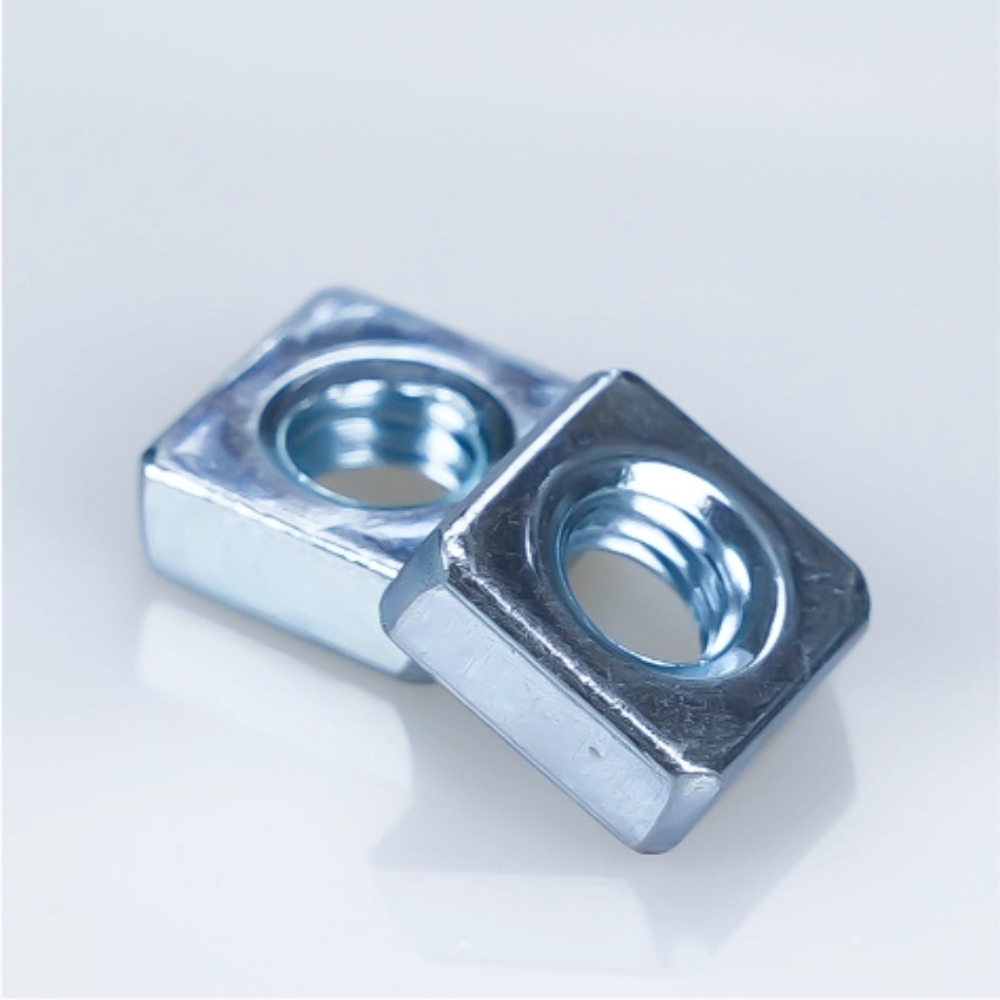
Many electric or slim-wall uses find a usual hex nut too large. The precision forming of square nuts DIN 562 fixes spots with tight room. There, the nut fits in a sunk square hole to stop spin. Solid Square Nuts DIN 562 give bigger touch space than hex nuts. That proves vital to block the tie from yanking through soft stuffs like plastic or slim aluminum.
Material Diversification for Enhanced Corrosion Resistance
Picking the proper stuff ranks as key as the form. To aid choice for your setting, review this info on usual nut stuffs and traits:
| Material Type | Typical Grade | Main Benefit | Suitable Environment |
|---|---|---|---|
| Carbon Steel | Class 8, 10 | High strength, low cost | Indoor, dry use |
| Stainless Steel | A2, A4 | Superior rust resistance | Marine, outdoor |
| Brass / Copper | — | Electrical conductivity | Electronics, aesthetic |
| Alloy Steel | 10.9, 12.9 | Extreme toughness | Heavy machinery |
Why Does Manufacturing Choice Affect Product Lifespan?
The life of ties sets well before arrival at your plant. Picks in warm handling and outer finish at the nuts factory set if a piece lasts years or breaks soon from weather strain or inner faults.
Impact of Heat Treatment on Fastener Ductility and Hardness
Warm handling needs fine balance. To gain the firmness for strong-pull uses, nuts face “Quenching” and “Tempering”. Yet wrong steps make strong steel open to “Hydrogen Embrittlement.” There, the metal turns weak and splits under push. Skilled makers apply “Baking” after coat to clear hydrogen. Thus, strong-pull lock nuts stay bendy and safe.
Quality Assurance through ISIR and PPAP Level 3 Certification
In key builds, eye checks alone fall short. Demand a high precision nuts factory that gives Initial Sample Inspection Reports (ISIR) and Production Part Approval Process (PPAP) papers. These papers check that each size and stuff trait fits your build plans. This open view builds trust that parts work as planned over full use time.
Bespoke Non-Standard Products Service for Unique Engineering Drawings
A usual DIN or ISO piece often misses a set build task. Needs might cover a odd screw space, a given rim width, or a non-usual height. A bespoke non-standard products service lets send of own plans and get trials before big output starts. It covers deep ends like Zinc Flake or Geomet to reach set salt-blast hold times.
| Finish Type | Salt Spray Resistance (Approx. Hours) | Key Characteristic |
|---|---|---|
| Zinc Plating (Cr3) | 48 – 96 | Economic, aesthetic |
| Hot-Dip Galvanized | 500 – 1000+ | Thick, outdoor protection |
| Zinc Flake (Geomet) | 720 – 1500+ | No hydrogen embrittlement risk |
| Black Oxide | < 24 | Requires oil for rust prevention |
Strategic Supply Chain Consolidation and Professional Service
Handling thousands of ties in moves can overwhelm. A provider with a Consolidation Service gathers varied items, from square nuts to nylon lock nuts, into one spot for send. This no-cost choice boosts work flow. It also ensures even quality over the full list of needs.
Picking the right tie fix should not involve guesswork. Resources like 3.1 certifications to DIN-EN-10204, comprehensive salt-spray resistance charts, and professional installation guidance help clear buy blocks with build sureness. Please contact our build group with job facts, such as screw fit needs or set weight-hold bounds. We prepare to offer a fit plan check and a build note made for your exact use wants.
FAQ
Q: Why do some lock nuts rotate during installation at a nuts factory?
A: This often occurs with nylon insert nuts if the nylon loop sits wrong or if slot sizes miss mark. A solid nuts factory applies light sort and firm QC to secure each nylon loop. A spinning loop fails to give needed steady turn.
Q: Can I reuse a nylon insert lock nut?
A: In theory, yes. But the anti-slack work drops with each go as the nylon screw already bears the pin’s cut. In key factory uses, usual rule calls to swap the nut each removal for top guard.
Q: What is the benefit of a Square Nut DIN 562 over a standard hex nut?
A: Square nuts bring far bigger touch space. They fit set for square holes or paths. This beats them for blocking spin in tight, especially in blind spots where wrench reach lacks.


