

caTEGORIES
Tags
How a Nuts Factory Chooses Materials for Better Fastener Performance
Posted: June 12, 2026
Categories: News
A nut looks simple, but the wrong material can cause real trouble after installation. Threads may wear too early. The joint may loosen under vibration. A plated carbon steel nut may rust faster than expected in a wet place. A stainless steel nut may cost more than needed for a dry indoor assembly. That is why a nuts factory should not only ask for size and quantity.
Qewit supplies DIN standard nuts and other fasteners for machinery, building, chemical industry, hardware, and general industrial use. For buyers, the key point is not to memorize every material name. It is to know which material fits the working condition, bolt grade, finish requirement, and assembly risk. This article covers the common materials used in nut manufacturing and gives practical notes for choosing DIN 982 and DIN 562 nuts.
What Are the Common Materials Used in Nut Manufacturing?
Material choice usually starts from the job site, not the catalog. A nut used inside a machine frame has different needs from one used outdoors or in a vibrating assembly. Before asking a nuts factory for pricing, buyers should be clear about strength, corrosion, finish, temperature, and whether the nut must resist loosening.
Carbon Steel for Strength and Cost Control
Carbon steel is a common choice for industrial nuts. It gives a useful balance of strength, supply stability, and cost. For many machinery parts, fixtures, building hardware, and indoor assemblies, carbon steel is enough when the finish is properly selected.
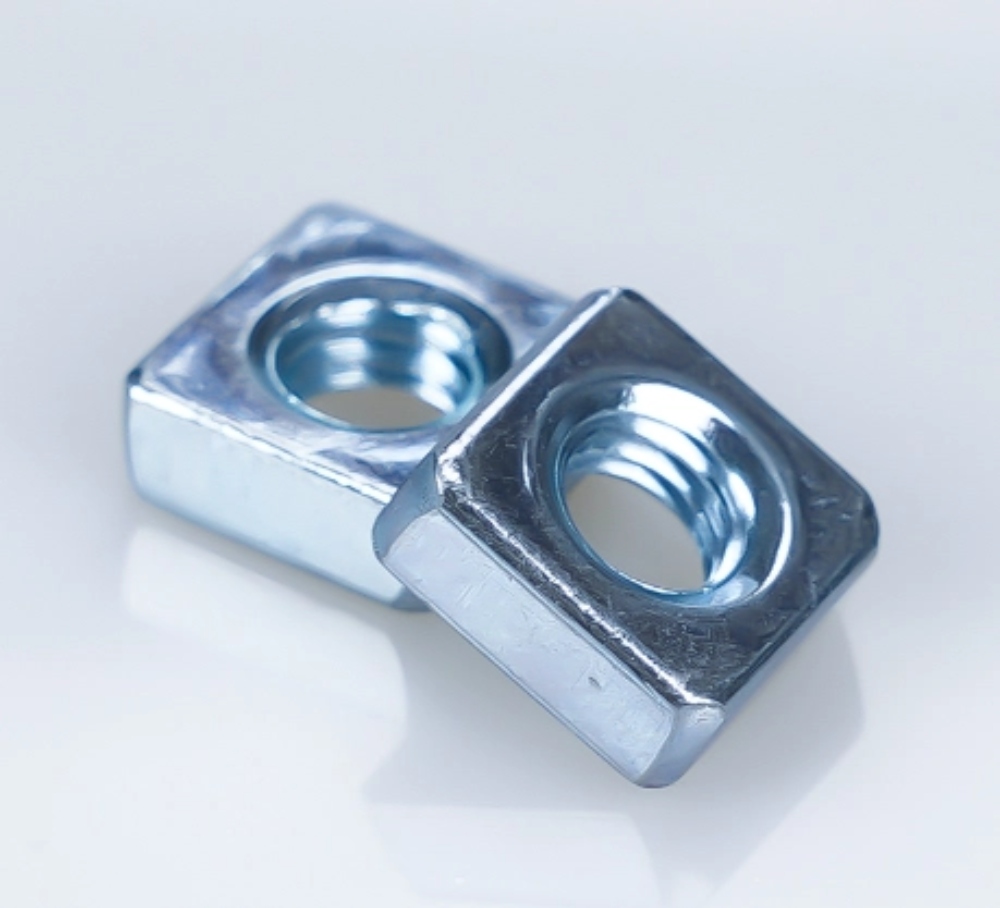
Qewit’s Square Nuts DIN 562 are made from carbon steel, with M4–M16 sizes and Self Colour or Zinc Plated finish options. This nut is useful when the assembly needs a thin square nut, a wider contact shape, or a part that works with square head bolts. It is not a locking nut, so if the joint has strong vibration, buyers should check another structure.
Stainless Steel for Corrosion Resistance
Stainless steel is usually chosen for moisture, outdoor exposure, cleaner appearance, or corrosion-sensitive assemblies. The price is often higher than carbon steel, but it can reduce later maintenance in the right environment.
For buyers comparing carbon steel nuts vs stainless steel nuts, the question is not which material is always better. The question is where the nut will work. If the part is hidden in a dry indoor machine, carbon steel may be practical. If the nut is exposed to rain, humidity, or cleaning chemicals, stainless steel may be safer.
Nylon Insert Structure for Vibration Resistance
Some fastening problems come from movement, not from weak metal. A nylon insert nut adds friction to the mating thread. After tightening, the nylon insert grips the bolt and helps reduce loosening.
Qewit’s Nylon Insert Nuts Type P DIN 982 are available in M3–M48, with carbon steel and stainless steel material options. The product can be selected with finishes such as Self Colour, Zinc Plated, Mechanical Galvanised, or Zinc Flake. DIN 982 is worth considering for machinery, equipment, building hardware, and other assemblies where vibration may loosen a standard nut.
How Do Nut Materials Affect Fastener Performance?
Many buyers ask how nut materials affect fastener performance. The answer is not only strength. Material also affects corrosion resistance, thread life, bolt matching, locking behavior, and the total cost of maintenance.
Strength Depends on Material and Grade Matching
A nut must match the bolt and the load. If the nut material or grade is too weak, the thread can deform. If the nut is over-specified, the buyer may pay more without getting real value.
A practical nuts factory should ask about the bolt, not only the nut. Thread size, bolt grade, working load, and tightening method all matter. This is especially important for repeat orders, because one wrong material choice may be repeated across many assemblies.
Corrosion Resistance Depends on Material and Finish
Material and surface finish need to be checked together. Carbon steel nuts often rely on finish options such as Self Colour, Zinc Plated, Mechanical Galvanised, or Zinc Flake, depending on the product and order requirement. Stainless steel gives corrosion resistance from the base material itself.
A bright finish does not always mean enough protection. For outdoor or wet use, buyers should explain the environment before confirming the nut material. If the nut will be difficult to replace later, corrosion resistance should be treated as part of the purchasing decision.
Anti-Loosening Depends on Structure
If loosening is the main problem, material alone may not solve it. A standard nut and a locking nut serve different jobs.
DIN 982 has a nylon insert structure for anti-loosening use. It is useful where vibration, movement, or repeated operation may loosen the joint. Still, it is not automatically suitable for every environment. If the assembly has high temperature or special chemical exposure, buyers should check whether the nylon insert fits the working condition.
When Should Buyers Compare Carbon Steel Nuts vs Stainless Steel Nuts?
This comparison is most useful when the working environment is clear. Carbon steel is often right for general industrial use. Stainless steel is better for corrosion resistance. The final choice should also consider finish, bolt material, maintenance access, and cost target.
| Selection Factor | Carbon Steel Nuts | Stainless Steel Nuts |
|---|---|---|
| Main Use | Machinery, fixtures, building hardware, indoor fastening | Outdoor, humid, corrosion-sensitive, appearance-sensitive assemblies |
| Main Value | Strength and cost control | Corrosion resistance and cleaner appearance |
| Finish Need | Often depends on plating or coating | Base material provides corrosion resistance |
| Buyer Check | Match finish with environment | Confirm grade, load, and budget |
For nut material selection for industrial applications, do not decide by price alone. A cheaper nut can become expensive if it rusts, loosens, or needs frequent replacement. A higher-cost material can also be unnecessary if the working condition is simple.
How Should Buyers Match Nut Materials With Bolts?
A nut and bolt work as one pair. If they are selected separately, the joint may still fit on paper but perform poorly in service. Nut material compatibility with bolts affects thread engagement, corrosion behavior, tightening feel, and joint stability.
Thread Compatibility and Grade Matching
Thread size must match, but that is only the first check. Buyers also need to confirm grade, material, coating, and expected load.
For example, a standard carbon steel square nut may be fine for a compact fixture. A vibrating machine part may need DIN 982 instead. A wet outdoor assembly may need stainless steel or a stronger corrosion-resistant finish. The supplier cannot judge this well without application details.
Coating and Contact Surface Matching
The bolt and nut finishes should work together. If one part is zinc plated and the other has a different surface, assembly behavior and corrosion performance may change. Coating thickness can also affect thread fit.
For bulk orders, it is better to confirm finish before production instead of fixing problems after delivery. Ask the nuts factory whether the selected nut finish matches the bolt and the working environment.
Vibration and Locking Requirements
DIN 982 and DIN 562 should not be treated as interchangeable. DIN 982 is for anti-loosening needs. DIN 562 is for thin square nut assemblies, compact positions, or square-bolt-related fastening.
If the joint moves, vibrates, or may loosen over time, DIN 982 is usually the first product to review. If space and square contact shape are the main concerns, DIN 562 may be more suitable.
What Should Buyers Ask a Nuts Factory Before Ordering?
Before sending an inquiry, prepare the standard, size, material, finish, bolt grade, working environment, vibration condition, and packaging need. This saves time for both sides and reduces the chance of wrong selection.
For product questions, material discussion, or non-standard requirements, Qewit’s technical support page can help buyers organize the key points before confirming an order.
A simple rule works for many projects. Choose DIN 982 when vibration resistance matters. Choose DIN 562 when the assembly needs a thin carbon steel square nut. Choose stainless steel options when corrosion resistance matters more than the lowest initial cost.
If your project involves mixed materials, special finishes, vibration risk, or bolt matching problems, prepare drawings, standards, material notes, finish needs, and working conditions before sending the request. Use the official contact page to share purchasing details, inspection needs, or packaging requirements with Qewit.
FAQ
Q: What Material Is Most Commonly Used for Industrial Nuts?
A: Carbon steel is commonly used because it offers strength, availability, and cost control. Stainless steel is selected when corrosion resistance or appearance matters more. A nuts factory should match the material with the working environment, not only the thread size.
Q: Are Nylon Insert Nuts Better Than Standard Nuts?
A: Nylon insert nuts are better for vibration resistance, but they are not needed in every assembly. They are useful for machinery or equipment where movement may loosen a standard nut. Buyers should still check temperature, chemical exposure, and nut material compatibility with bolts.
Q: Why Should a Nuts Factory Check Nut Material Compatibility With Bolts?
A: A nuts factory should check nut material compatibility with bolts because the nut and bolt work together. Material, grade, finish, thread fit, and working environment all affect joint strength, corrosion behavior, and long-term stability.


