

CATEGORIAS
Etiquetas
Parafusos passantes versus ancoragens de expansão: qual é a mais resistente em concreto?
Publicado: 14 de agosto de 2026
Categorias: Novas
Para fixação em concreto sólido e denso, os parafusos passantes geralmente são a opção mais resistente quando a junta precisa suportar tração e cargas laterais. As buchas de expansão continuam sendo úteis em tijolo maciço, bloco de concreto e pedra, ou quando o projeto exige uma conexão roscada saliente. O resultado final ainda depende do diâmetro, profundidade de embutimento, espessura da fixação, condição do furo, espaçamento, distância da borda e torque de aperto.
O que diferencia os parafusos passantes dos chumbadores de expansão em concreto?
Ambos são ancoragens mecânicas pós-instaladas, mas seus mecanismos de expansão criam caminhos de carga diferentes.
Expansão de parafusos passantes por fixação direta
Uma bucha de fixação passa através da peça a ser fixada no furo previamente perfurado. O aperto puxa o cone para dentro da seção de expansão e o pressiona contra a parede, sendo adequada para placas de base, suportes, estruturas de máquinas e bases de postes.
Qewit Fornece fixadores e elementos de fixação desde 2004, com produtos padrão e não padrão, opções de acabamento, inspeção de lotes, amostras, embalagens e suporte técnico.
O Qewit através da Bolta Está disponível nos tamanhos M6 a M24 em aço carbono ou aço inoxidável, com acabamento em zinco e Cr3+ transparente. Sua tabela separa o comprimento total, o comprimento da rosca, a espessura da fixação e a profundidade mínima do furo, ajudando os compradores a evitar a seleção de parafusos passantes para concreto apenas pelo diâmetro.
Expansão da manga das âncoras do escudo
Uma bucha de ancoragem utiliza uma luva segmentada. À medida que o cone interno ou o elemento roscado é apertado, a luva se expande contra o furo. Normalmente, ela é instalada antes da fixação do acessório, sendo adequada para suportes de adaptação e conexões roscadas expostas.
A Qewit oferece buchas de ancoragem com escudo projetado e buchas de ancoragem com escudo (somente escudo) nos tamanhos M6 a M16, em aço carbono e aço inoxidável, para concreto, blocos de concreto, tijolo maciço e pedra. As unidades somente com escudo podem ser combinadas com um componente roscado compatível.
Diferentes métodos de instalação criam diferentes perfis de resistência.
"Parafuso de ancoragem" é uma categoria ampla. Um parafuso passante utiliza um formato de expansão controlada por torque, enquanto uma âncora de blindagem usa expansão por bucha com uma conexão roscada separada ou saliente.
Para obter mais detalhes, consulte o artigo de Qewit. guia técnico de desempenho de âncoraA decisão final deve começar com o material base, a direção da carga e a geometria da fixação.
Qual âncora é mais resistente sob cargas reais de concreto?
A resistência não se resume a um único valor de força de arrancamento. Os compradores devem separar a resistência à tração, a resistência ao cisalhamento e o modo de falha predominante.
A resistência à tração e ao arrancamento depende do sistema completo.
Os procedimentos europeus de avaliação para fixadores mecânicos pós-instalados abrangem classes de concreto de peso normal de C20/25 a C50/60, com opções separadas para concreto fissurado e não fissurado. Essa estrutura não garante que todos os itens da Qewit tenham um prazo de entrega estimado (ETA) específico para toda essa gama. Projetos estruturais devem solicitar a aprovação ou os dados de teste necessários.
Em concreto denso e sem fissuras, o mecanismo de expansão pode formar um contato firme com o furo. A qualidade do aço, por si só, não determina a capacidade de fixação. Profundidade de ancoragem insuficiente do parafuso passante, perfuração fora da tolerância, presença de poeira no furo ou concreto fraco podem causar o arrancamento ou a quebra do concreto antes da perfuração.
O torque de instalação deve ser obtido conforme as instruções do fabricante ou a ETA aplicável. Os documentos de avaliação europeus exigem que sejam relatados os procedimentos de perfuração, limpeza, ferramentas e momentos de torque; tabelas de parafusos comuns não devem ser aplicadas a buchas de expansão.
A resistência ao cisalhamento favorece a fixação estável através da estrutura.
A força de cisalhamento atua na ancoragem em bases de máquinas, suportes, corrimãos e suportes de postes. A fixação direta através da placa pode limitar o movimento, mas o diâmetro, a espessura da placa, a folga, a posição da borda, a vibração e o impacto ainda são fatores importantes.
Isso é especialmente relevante para parafusos passantes em postes de decks. As bases dos postes podem ficar próximas às bordas da laje e receber forças laterais repetidas; a exposição ao ar livre também afeta o material e o revestimento.
Os modos de falha revelam o verdadeiro limite de resistência.
As falhas podem incluir fratura do aço, arrancamento da âncora, quebra do cone de concreto, fissuração da borda, arrancamento por alavanca ou esmagamento localizado da alvenaria. O modo predominante pode mudar mesmo quando duas âncoras compartilham o mesmo diâmetro nominal.
Para concreto sólido e cargas combinadas exigentes, os parafusos passantes geralmente são a opção mais adequada. Para tijolo maciço, bloco de concreto, pedra ou uma conexão com montante saliente, uma bucha de ancoragem pode ser mais apropriada para a instalação.
Quais fatores de instalação podem reduzir a resistência da ancoragem?
Um item de catálogo correto ainda pode apresentar desempenho inferior se a perfuração, a seleção do comprimento, o aperto ou o layout forem inadequados.
O diâmetro, o comprimento de embutimento e a espessura da fixação devem ser iguais.
Diâmetro, comprimento total, comprimento da rosca, espessura da fixação e ancoragem efetiva são valores distintos. Uma placa mais espessa consome o comprimento disponível, portanto, o tamanho M por si só pode resultar em ancoragem inadequada.
Qewit's Heavy Duty Through Bolt Está disponível em tamanhos de M6 a M24, com diversos comprimentos, comprimentos de rosca e espessuras máximas de fixação. Pode ser adequado para fixações mais espessas, mas o termo "âncoras de concreto para serviço pesado" não elimina a necessidade de verificar o substrato, o espaçamento, a distância da borda e os requisitos de carga.
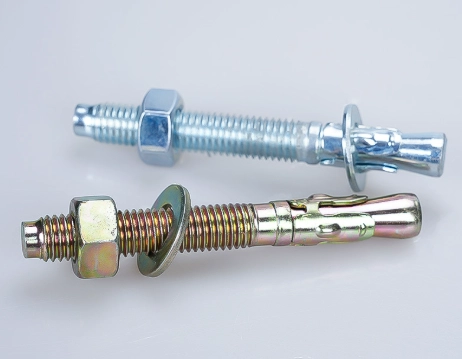
Furos limpos e aperto controlado protegem a capacidade de fixação.
O furo deve corresponder ao diâmetro e à profundidade especificados. Remova a poeira, encaixe a âncora completamente e aplique o torque indicado.
Um torque insuficiente pode deixar a bucha parcialmente engatada. Um torque excessivo pode ceder o fixador, danificar as roscas ou sobrecarregar o concreto. A avaliação de ancoragens mecânicas inclui verificações de torque máximo por esse motivo.
Distância da borda, espaçamento e condição do concreto definem limites.
Uma âncora muito próxima da borda pode rachar o elemento estrutural ou reduzir o cone de ruptura. Âncoras muito próximas umas das outras podem apresentar zonas de tensão sobrepostas.
Verifique se há rachaduras, juntas, vazios, faces danificadas e seções ocas. Buchas de expansão comuns não devem ser consideradas fixações padrão para cavidades sem evidências específicas do projeto.
Qual produto Qewit é adequado para cada cenário de reparo?
Após conhecer o substrato e a disposição das fixações, compare as quatro opções de acordo com o caminho de instalação.
Parafuso passante para fixação geral em concreto e pedra maciça
O parafuso passante padrão é adequado para fixação direta em concreto ou pedra maciça, onde a peça permanece no local durante a instalação. A gama M6–M24 oferece diversas combinações de diâmetro e comprimento. O aço carbono ou o aço inoxidável devem ser selecionados de acordo com a exposição e as especificações do projeto.
Parafuso passante reforçado para fixações mais espessas
O parafuso passante reforçado é mais indicado quando placas de base, suportes ou estruturas de equipamentos exigem maior espessura de fixação ou comprimento total. Os compradores devem comparar a linha exata da tabela e, em seguida, confirmar o acabamento, o torque de instalação, as peças de acoplamento e a documentação.
Opções de ancoragem com escudo para conexões flexíveis em alvenaria
O Projetando Ancora do escudo A ferramenta possui uma seção roscada exposta e é indicada para uso em concreto, blocos de concreto, tijolo maciço e pedra. Sua tabela fornece informações sobre o tamanho do furo, comprimento da proteção, diâmetro da rosca, espessura de fixação e profundidade mínima do furo.
Bucha de ancoragem com escudo — A bucha de ancoragem com escudo é adequada apenas para compradores que precisam usar a bucha com outro componente roscado compatível. Para buchas de ancoragem com escudo em alvenaria maciça, verifique a condição do tijolo e a posição da borda, pois a resistência da alvenaria varia entre as unidades e juntas de argamassa.
Como os compradores devem finalizar a compra do imóvel principal?
A etapa final é uma especificação de compra que as equipes de produção, inspeção e instalação podem seguir.
Lista de verificação para seleção baseada em cenários
| Questão de seleção | Direção do parafuso passante | Direção da âncora do escudo |
|---|---|---|
| Material base | concreto sólido ou pedra maciça | Concreto, tijolo maciço, bloco ou pedra. |
| Instalação | Através da estrutura | A blindagem é configurada antes da conexão final. |
| Uso típico | Placas de base, estruturas de máquinas, bases de postes | Suportes de adaptação e conexões salientes |
| Verificação principal | Espessura e profundidade de embutimento da fixação | Dimensões do furo, comprimento da blindagem e rosca de acoplamento |
| Risco principal | Ruptura de borda ou embutimento raso | Alvenaria frágil ou peças incompatíveis |
O pedido deve especificar o layout, a direção de carregamento, o ambiente, o acabamento, a quantidade, a embalagem e os documentos necessários.
Verificações de materiais, acabamentos e documentação.
A base de conhecimento da Qewit abrange aço carbono, aço inoxidável, zincagem, zinco amarelo, galvanização a quente, galvanização mecânica, acabamentos com flocos de zinco e outros tratamentos. Ela também lista equipamentos para testes de carga de prova, tração, torção, dureza, espessura de revestimento e névoa salina.
Os compradores podem especificar amostras, relatórios dimensionais, verificações de revestimento, certificação DIN EN 10204 3.1, ISIR ou PPAP até o nível 3, quando aplicável. Esses requisitos devem ser acordados antes do pedido.
Suporte para testes, serviços e contato com a Qewit
A Qewit oferece suporte à produção a partir de desenhos ou amostras, acabamento personalizado, triagem, compras consolidadas, embalagem e inspeção pré-embarque.
Prepare o material base, as dimensões, a espessura da estrutura, o layout, a direção da carga, a exposição, a quantidade e os certificados. Envie-os através do Qewit. contato página para que todos os quatro formatos possam ser comparados nas mesmas condições.
Para conexões exigentes em concreto maciço, os parafusos passantes continuam sendo a opção mais robusta em muitas aplicações. A escolha confiável é o produto cujas dimensões, profundidade de ancoragem, instruções de torque, evidências de substrato e documentos de inspeção correspondam à instalação.
FAQ
P: Parafusos passantes são sempre mais resistentes que ancoragens de escudo?
R: Não. Elas costumam ser mais adequadas para fixações mais exigentes em concreto íntegro, especialmente onde cargas de tração e cisalhamento atuam simultaneamente. As buchas de expansão podem ser mais práticas em alvenaria maciça ou onde é necessária uma conexão roscada saliente.
P: É possível usar buchas de ancoragem em blocos de concreto?
A: A Qewit lista as âncoras de escudo projetadas e as âncoras de escudo — somente para escudo — para blocos de concreto, concreto, tijolo maciço e pedra. O bloco ainda deve ser verificado quanto à solidez, condição, distância da borda e carga esperada.
P: Que informações são necessárias para selecionar o tamanho correto da âncora?
A: Forneça o material base, a espessura da fixação, o espaçamento das âncoras, a distância da borda, a direção da carga, o ambiente, o acabamento, a quantidade e os requisitos de documentação. Esses detalhes são mais confiáveis do que apenas o diâmetro.


