

KATEGORIEN
Wood Screws vs. Drywall Screws: Which Offers Better Holding Power
Veröffentlicht: March 27, 2026
Kategorien: Neuigkeiten
Selecting the correct fastener can mean the difference between a lasting project and one that breaks down quickly. For business-to-business purchasers and construction professionals using Qewit, knowing the technical details of our stock is key to ensuring safety and saving costs. Although a screw appears as a basic threaded item, the design behind it determines the load it supports and how it connects with various base materials.
To maximize your building process, you need to examine beyond appearances. This overview explains the build of wood screws, the focused role of drywall fasteners, and how current machinery is altering installation pace. Whether you construct sturdy timber frames or produce large quantities of furniture, the details below will guide you to the proper selection each time.
What Defines the Structural Integrity of Wood Screws?
Timber acts as a natural substance that swells and shrinks with surroundings, and wood screws are made to manage that change. Unlike general fasteners, these integrate directly with wood strands instead of merely resting in an opening. Qewit’s production method emphasizes the mechanics of the hold, guaranteeing that a driven screw remains secure amid weather shifts and regular handling.
The durability of these items stems not only from the metal but from how the threads engage the timber’s cellular makeup. Now, consider the particular elements that provide wood screws with their reliable grip.
Tapered Shafts and Deep Coarse Threads
A key trait of an authentic wood screw lies in its broad, sharp thread setup. These threads function like small ramps that sink into the wood grain, offering extensive contact area. With a greater spacing between threads, the screw advances swiftly through softer or moderately firm woods, while reducing the friction that often causes damaged heads or broken shafts.
Cut-off Tail Design to Prevent Splitting
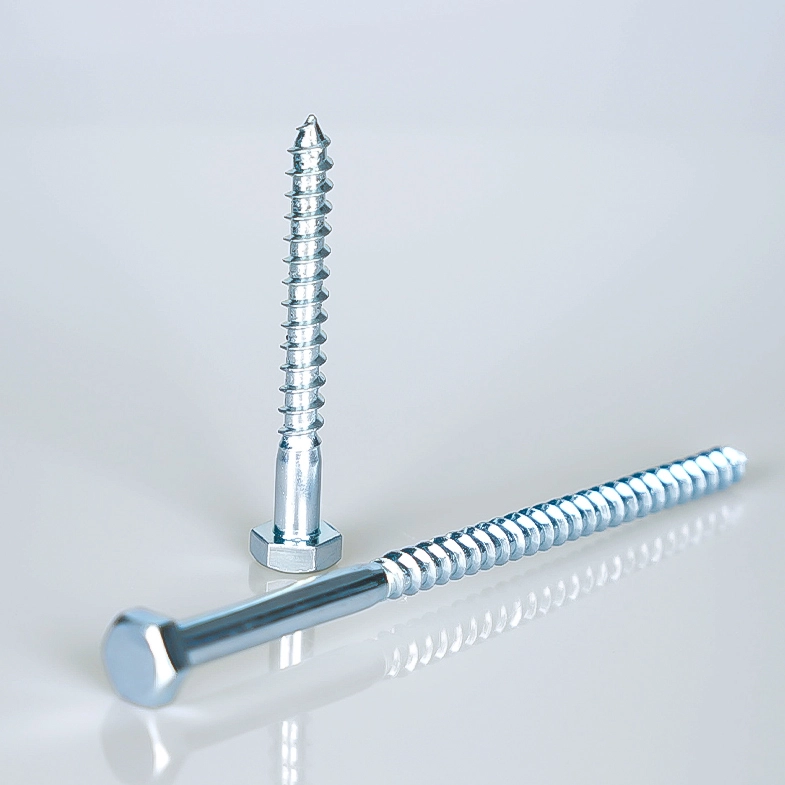
A frequent issue in woodwork occurs when the material cracks just as the screw embeds fully. This explains why premium choices, such as our Stainless Steel Hexagon Head Coach Screws (DIN 571), include a notched or slotted end. This notch at the point works like an embedded drill, removing wood particles and forming a route for the screw’s body. As a result, it eases stress on the wood, so you can frequently avoid pre-drilling, even close to a board’s edge.
Material Diversity for Environmental Durability
The effectiveness of a screw depends on the conditions it endures, which makes material selection crucial for strength. Carbon steel suits interior framing well, but exterior tasks require sturdier options like the DIN 571 coach screws in stainless steel. These resist rust and decay over long periods, positioning them as the preferred pick for platforms, piers, and robust outdoor wood frames where reliability is critical.
How Do Drywall Screws Differ in Application and Grip?
If wood screws serve as the main supports in building, drywall screws act as quick experts. They do not support roofs; instead, they secure gypsum panels to frames accurately. Since drywall consists of a fragile plaster center between paper layers, the screw must cut through the back sharply yet avoid ripping the front surface.
Grasping the contrast with wood-focused types is important. An incorrect choice can cause fasteners to loosen gradually or, worse, lead to wall structure collapse.
Hardened Steel for Piercing Keels
Drywall screws undergo intense heat processing to achieve great hardness. This property is vital as they frequently penetrate thin metal frames or studs without prior holes. Although this stiffness aids penetration, it renders them more fragile than wood screws; they resist bending, so they suit panel mounting best rather than load-bearing frames.
Coarse vs Fine Thread Versatility
Drywall attaches to varied surfaces, so Qewit offers both coarse and fine thread varieties. The Grobes Gewinde zusammengesetzte Trockenwandschraube works standard for wood frames, where broad threads latch onto soft fibers securely. For metal frames, however, a fine-thread model fits better, since the closer threads create more engagement points on slim metal, avoiding later loosening from movement.
Trumpet Head Design for Flush Finishes
Known as a “bugle head,” the drywall screw’s top is formed to blend in. During insertion, the rounded base presses the drywall lightly instead of slicing it. This forms a neat indentation that fillers can cover smoothly, yielding a level wall surface after painting.
Why Is the Furniture Screw Considered a Specialized Hybrid?
Furniture production poses unique demands, mainly because materials seldom consist of solid wood alone. Contemporary pieces use composite boards like MDF and particleboard, which are pressed particles and adhesive. Regular wood screws often damage these boards’ inner layers, resulting in weak openings that fail to support loads.
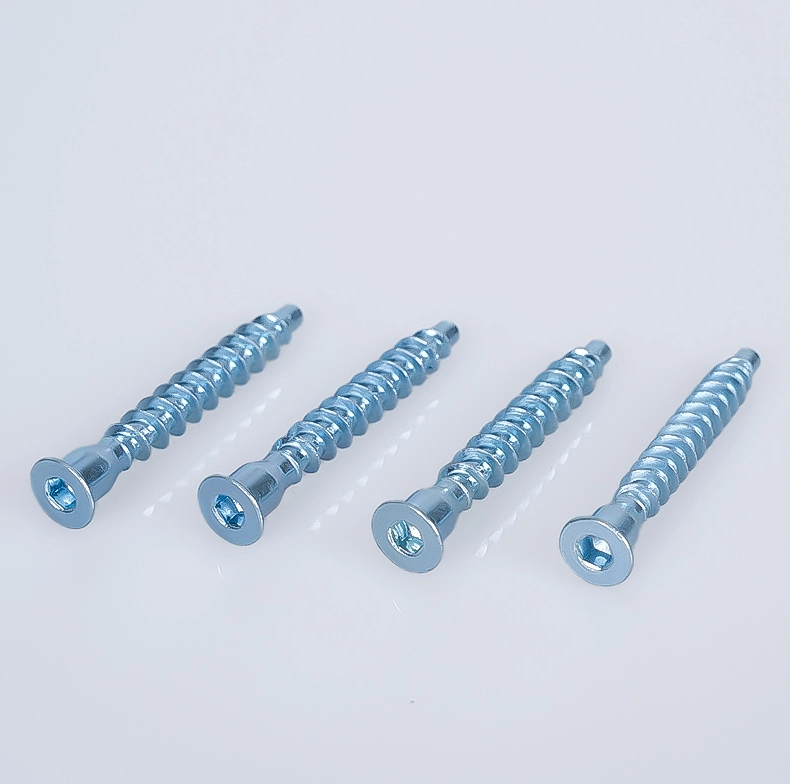
Here, the dedicated Möbelschraube fills the role. It combines traits of structural bolts and wood screws, with a thread pattern that handles composites carefully to maintain bonds under everyday pressure.
Optimized for Engineered Wood Products
Composite boards lack natural fibers for gripping, so furniture screws feature deeper, keener threads that form anchors inside the material. These self-tap into wood composites, carving clear channels in dense centers without surface swelling. Thus, connections stay firm even after prolonged use like drawer pulls or table leans.
Aesthetic and Functional Head Varieties
In furniture, appearance matters nearly as much as strength. Qewit supplies furniture screws in diverse head forms, such as countersunk for seamless fits or pan heads for visible accents. Many include hex or star drives internally, which appear more refined than Phillips types and permit greater turning force without slipping or marring surfaces.
Compatibility with Automated Assembly Systems
For large-scale furniture makers, pace drives production, shifting from individual screws. Numerous furniture fasteners now work with feeding machines and linked strips. This lets operators insert screws rapidly with minimal effort, boosting line output while placing each at uniform depth.
Which Fastener Provides Superior Holding Power for Your Project?
No universal “top” screw exists; suitability hinges on the joined elements and applied stresses. A tiny drywall screw would buckle under a beam’s vertical load, while a large coach screw would ruin fragile drywall before securing it.
Proper selection balances material firmness against project needs. Below, explore how to decide for your case.
Load Requirements and Tensile Strength
For substantial timber or supporting joints, the Hex Head Coach Screw often leads. Driven by wrench or socket, it applies immense torque, clamping wood pieces with heavy force. Its robust core and strong steel handle sideways stresses that would break ordinary screws, explaining use in homes, decks, or factories.
Substrate Density and Material Matching
Thread spacing must align with material thickness for optimal hold. Broad threads suit softwoods like pine, capturing ample wood volume. For dense hardwoods like oak or metal links, narrow threads excel, offering numerous grips without wear for firmer bonds.
Resistance to Loosening and Vibration
In vibrating settings like machines or busy structures, screws face gradual withdrawal. Qewit’s experts suggest coatings like Zinc Flake or Geomet, which maintain friction to keep threads fixed. For vital furniture or cabinets, partial threading aids by drawing top and bottom boards snug without dual engagement.
Can Collated Systems Improve Installation Efficiency?
As workforce expenses grow, installation methods matter as much as the fasteners. Individual screws prove cumbersome; they drop easily, need both hands to begin, and disrupt workflow. Hence, many builders adopt collated setups, resembling nailer operations.
These automated approaches suit not just major operations but any task involving numerous insertions per session without fatiguing teams.
Automation via Plastic Chain Belts
The Coarse Thread Collated Drywall Screw illustrates this efficiency gain. By arranging 50 screws on a pliable plastic band, users advance between points without pouch access. The device advances the next screw post-insertion, enabling steady progress far quicker than manual handling.
Significant Reduction in Material Waste
Dropped screws accumulate losses over big jobs, reaching 5-10% of budgets in loose use. Collated methods nearly erase this, as screws stay attached until embedded, ensuring full utilization of purchased items.
Speed and Labor Cost Savings
Real data highlights collated benefits strikingly. Skilled users can mount up to 55 panels daily with these aids. Such rapidity halves completion time or staffing, marking the prime savings for mass builds like housing or factory lines.
FAQ (häufig gestellte Fragen)
Q1: Can I use drywall screws for outdoor woodworking projects?
A: It is generally not recommended to use standard drywall screws for outdoor wood projects. Most drywall screws are finished with a thin black phosphate coating that is meant for dry, indoor environments and will rust quickly when exposed to moisture. For outdoor work, it is much better to use stainless steel coach screws or wood screws with a high-corrosion-resistant finish like hot-dip galvanizing.
Q2: Why do some wood screws have a section of the shank with no threads?
A: This is called a partial thread design, and it serves a very specific purpose. When you are fastening two boards together, the unthreaded part allows the screw to spin freely in the top board while the threads grab the bottom board. This pulls the two pieces of wood tightly together for a gap-free joint; if the screw was threaded all the way to the top, it could actually push the boards apart if they aren’t clamped perfectly.
Q3: Are collated screws compatible with any standard drill?
A: No, collated screws require a specific auto-feed attachment or a dedicated collated screw gun. These tools are designed to hold the plastic chain and index the screws forward one at a time as the nose of the tool is depressed. While it requires an upfront investment in the tool, the massive increase in speed and reduction in wasted screws usually pays for the equipment within the first few large-scale projects.


