

KATEGORIEN
DIN 6921 Hex Flange Bolts: How to Choose Serrations and Thread Length
Veröffentlicht: November 20, 2026
Kategorien: Neuigkeiten
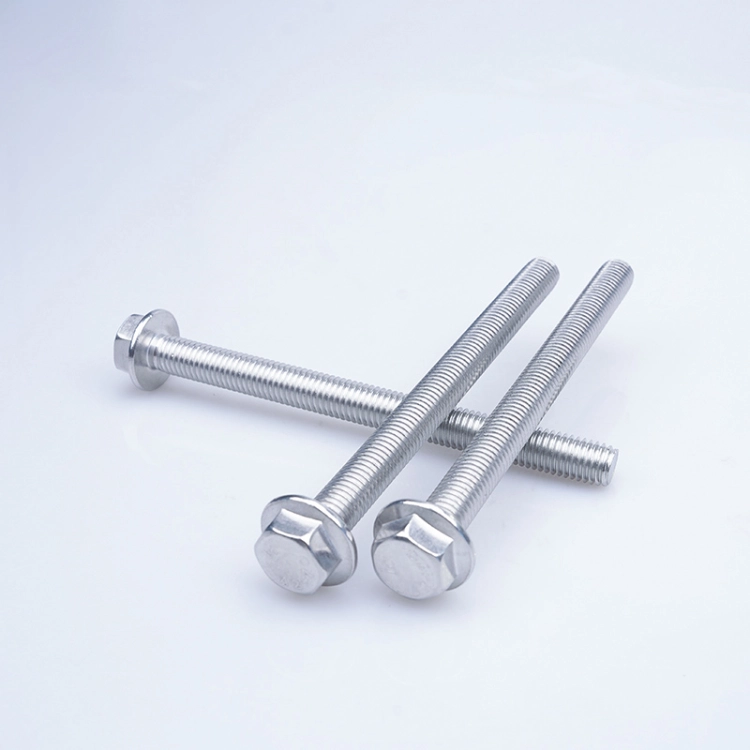
From the top, the pair of DIN 6921 bolts on my desk looks the same. Flip them over and the difference appears. One has a plain underside. The other has teeth around the flange. Thread coverage is the second point I check. I put both details on the RFQ before asking for a price.
Start with the flange, not the catalogue name
Head and flange are made as one piece. Against a normal hex head, this seat takes up more room on the workpiece. Tightening pressure is shared across that larger circle. So, in plenty of joints, the loose flat washer comes off the bill of materials. That matters on the line: no extra washer to feed, drop or forget.
The seat still needs room. I do not approve it against a clean test plate; I use the real bracket. Weld spatter beside the hole? A bent lip, tight radius or heavy paint? Any of them can hold up one side. After the trial, a lone shiny patch at the edge gives the bad seating away.
Qewit’s October notes cover machinery, vehicle parts, PV brackets, racks, cabinets, aluminum frames and farm equipment. I look at the actual contact face, not just the size column. An M10 in a painted cabinet panel does not sit like an M10 in a heavy machine bracket.
Serrated and smooth flanges do different work
Qewit supplies smooth and serrated versions of the DIN 6921 hex flange bolt. A general strength ranking is not useful here. Instead, inspect what the underside will do to the part.
Serrations dig into the face as the head seats. That bite can resist turning on a vibrating bracket or machine frame. Marks on bare steel are sometimes allowed. Paint and aluminum are another matter. The teeth can cut a ring on the first tightening. Where the coating keeps corrosion away, or the panel is on show, that ring needs the drawing owner’s answer before I sign off.
The smooth type leaves no row of tooth marks. It deserves the first trial on a cosmetic panel, a coated part, or a joint opened for service. Severe vibration may still require a separate locking method. Neither underside should be treated as the whole locking system.
A catalogue photo cannot answer this, so I use a short bench trial. I mark the head, install the bolt on a production part and, where the procedure permits, take it out again. Then I read the contact patch. A complete circle is a good sign. A thin curved patch sends me back to the hole. Perhaps there is a burr, a close radius, or a panel pulled out of shape. With a serrated head, the tooth marks go into a photograph for whoever owns the drawing.
Soft material may settle under vibration and quietly reduce clamp load. The head may not visibly turn, yet the joint is no longer as tight as it was. Qewit’s discussion of bolts and nuts for high-vibration applications is useful for this reason: the locking feature has to be judged together with the clamped parts.
Full thread or partial thread depends on the grip
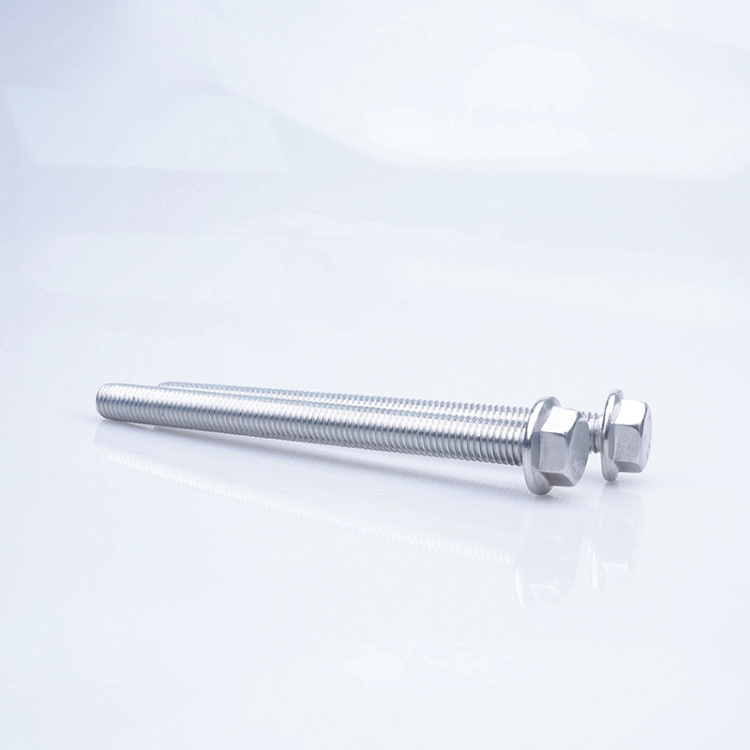
The product material describes full-thread and half-thread versions. Full thread is the straightforward fit for thin parts and short through-hole stacks. It also tolerates a small change in where the nut finally lands.
Partial thread leaves a plain shank below the head. That plain section can locate thicker plates and keeps threads out of part of the grip. This only works when the drawing dimensions agree. A nut that reaches the plain shank has nowhere useful to go. Leaning harder on the wrench will not close the gap; something in the hardware or stack will simply suffer.
Before writing the RFQ, I measure the stack as it will be built. These four entries catch most ordering mistakes:
- Thread diameter and pitch
- Overall bolt length under the agreed measuring convention
- Complete grip, with every plate, bracket, spacer, and approved washer
- Required thread projection after tightening
Overall length does not tell the whole story. I have seen equal-length M10 bolts with the thread stopping at different points. I prefer to put required thread length straight onto the buyer’s drawing. No dimension there? Then the supplier owes me a side view before approval. This catches the stock-list substitution that looks fine on paper and stops at the assembly bench.
Check what the flange does to the surface
A large flange is not automatically kind to the workpiece. Let it land at an angle and the pressure moves to one short section of rim. Sheet can dish. Aluminum keeps the ring. Paint cracks beside the hole, sometimes right down to bare metal.
Use the intended socket and tighten the trial piece under the production method. Then inspect four places:
- See whether the outer rim has caught a bend or a weld.
- Check the coating under the head for a cut or a crushed patch.
- The panel around the hole for dishing or raised burrs.
- The first engaged threads for signs that the bolt ran out of usable thread.
The purchase order also needs the finish. Zinc plate, HDG, a black finish and stainless material are different buying choices. Build-up and fit change, as does corrosion behaviour. Friction at the thread and below the head changes too. A proposed finish swap is never just a new colour on my approval sheet.
Tightening still needs a defined procedure
Deleting a washer says nothing about tightening. The socket still has to fit the hex and run square. Let the tool lean and a corner may round off while the flange is still short of its seat.
I use only the torque approved for that property class, material, finish, lubricant and mating thread. A value from a look-alike bolt may clamp very differently. Teeth add resistance below the head. Lubricant alters the thread and bearing face. The trial has to include both.
I stop as soon as the head catches a weld, the teeth rip a protected finish, or the nut starts running onto plain shank. These are drawing or fit problems. Reaching for a longer wrench merely postpones the discovery until inspection, or worse, until the machine is in service.
Put the missing details back into the RFQ
When an RFQ says only “DIN 6921, M10,” every supplier has to guess. I add the underside type, thread coverage, material, finish and delivery documents. Otherwise, two quotations may carry the same item name but describe different bolts.
| RFQ line | Record this detail | What it prevents |
|---|---|---|
| Flange | Smooth or serrated | Wrong surface bite or coating damage |
| Faden | Full or specified partial thread | Nut stopping on the plain shank |
| Grip | All parts held between head and nut | Thread stops too soon |
| Oberfläche | Bare steel, aluminum, coating, or a visible face | Wrong underside for the job |
| Supply | Material, finish, marking, papers | Unapproved change |
Qewit’ S bolts and setscrews range helps when checking nearby head and thread choices. For approval, though, I refer to a numbered sample, a drawing, or both. A category photograph cannot show where the flange meets a particular component.
Questions buyers usually ask before ordering
Can a DIN 6921 flange bolt always replace the washer?
No. Bearing area may be only one reason for that washer. It could set a gap, support a seal, isolate two materials or save the surface. I check its job on the drawing before removing it.
Is a serrated flange always right for vibration?
No. Teeth can resist rotation and still be wrong for paint, plating, or soft aluminum. They do not stop a soft panel from settling either. Approve the complete joint rather than choosing from the bolt underside alone.
How can I tell whether partial thread will fit?
Compare grip thickness against both the plain-shank length and usable thread. The nut must reach its tightening position entirely on usable thread. When the catalogue omits the transition, get a side drawing before ordering.
Confirm the sample on the real assembly
Schicken Qewit the thread size, pitch, overall length, required thread coverage, smooth or serrated flange, material, finish, and a view of the bearing surface. Use a production component for the sample fit. That short trial reveals poor seating, coating damage, and a wrong thread transition far earlier than incoming inspection of a finished lot.


