

KATEGORIEN
How to Choose Lock Nuts for High Temperature, Vibration and Soft Metal Assemblies
Veröffentlicht: October 29, 2026
Kategorien:
A lock nut question usually comes in with a photo, and the photo usually tells us more than the part number does. A nylon insert gets soft in the heat, and the squeeze it relies on gets weaker with it. Serrations dig into whatever face they sit on, and on a soft face that leaves marks the customer was not expecting. A cotter pin on a castellated nut keeps the nut from rotating, and that is the whole of its job. It puts no clamp force into the joint at all. Three different ways the joint can fail, so I want to know how your joint actually runs before I name a part.
Start with the failure mode, not the nut name
Before comparing the nut range, note three things on the drawing or job sheet: operating temperature, bearing materials and access for future service. ‘Self-locking’ describes a function, not how the nut behaves on a painted aluminum face or in a hot enclosure.
| Locking type | Best starting point | Avoid or verify carefully |
| Nyloneinsatz | Normal temperature; low to moderate vibration | Sustained heat, oils or chemicals without compatibility data |
| All-metal prevailing torque | High temperature; continuous vibration; contaminated service | Galling risk, installation torque and surface treatment |
| Serrated flange | Hard surfaces where tooth bite is acceptable | Soft aluminum, plastic or finished cosmetic surfaces |
| Castellated + cotter pin | Critical joints needing visible positive retention | Applications needing continuous nut-position adjustment |
| K-type | Low-cost, low-vibration assembly | Strong or sustained vibration |
High temperature favors an all-metal mechanism
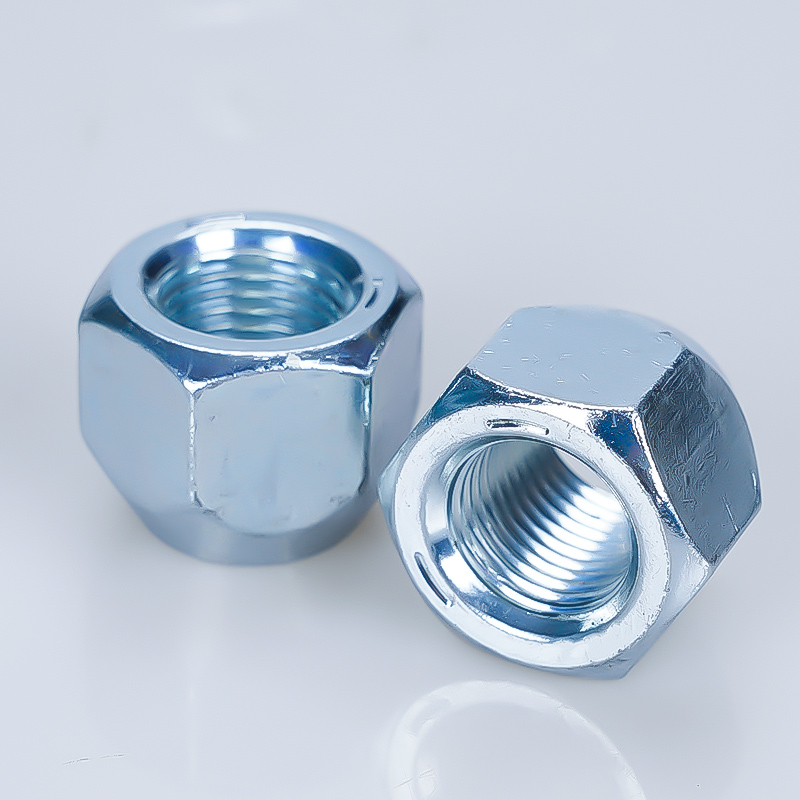
A nylon insert relies on polymer interference. A DIN 980V all-metal nut instead uses a deformed thread section to create prevailing torque. That removes one heat-sensitive component, not every temperature limit; confirm the base metal and finish against the service conditions.
When the nut’s locking section adds run-on torque, account for it in the tightening procedure. Otherwise the wrench may reach its target before the joint has the intended clamp force. Stainless mating threads bring a separate risk: galling. If lubricant is introduced to prevent seizure, review the torque instruction because friction has changed.
Vibration requires both retention and clamp control
A cotter pin stops a castellated nut from rotating past the pin. It does not tighten the joint. The installer must establish the specified seating condition and align the slot according to the approved assembly procedure, rather than backing off arbitrarily to make the pin fit.
If vibration is the concern, inspect the joint faces as well as the nut. Settling or movement can reduce preload while the locking feature remains engaged. Qewit’s overview of high-vibration bolted joints is a useful reminder to assess the grip and mating surfaces as part of the assembly.
Soft aluminum and plastic change the answer
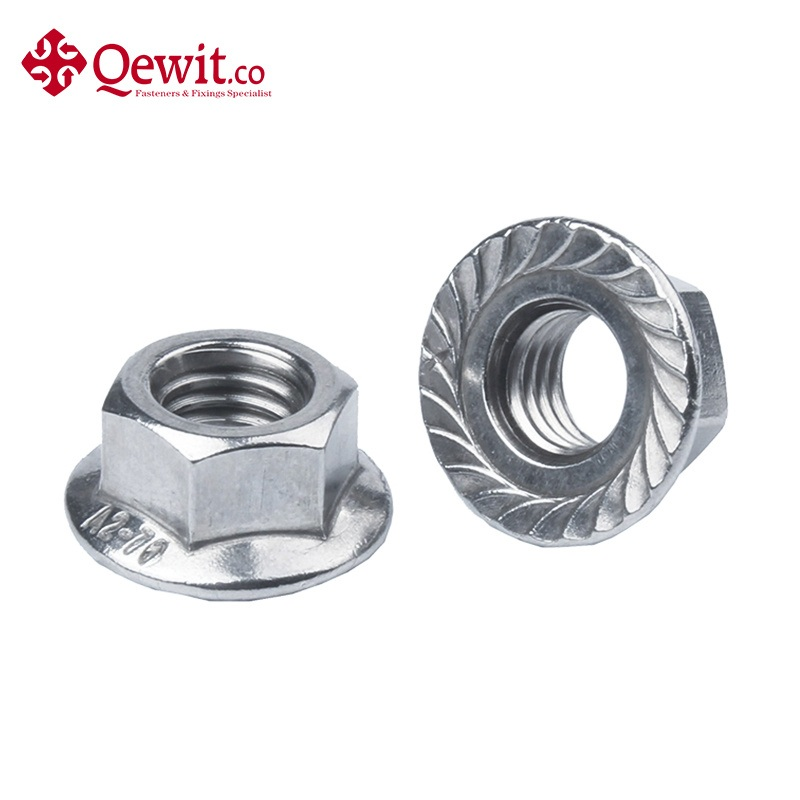
A serrated flange gets its bite by pressing teeth into the bearing face. Try that on soft aluminum and the teeth may leave a gouge; on painted steel they can cut through the coating. If the surface has to remain intact, that feature is a drawback, not a benefit.
A nut can resist rotation and still leave a loose assembly if the plastic under it relaxes. Check the bearing pressure and whether the joint designer permits a washer; adding one changes the stack and should not be an improvised repair.
Where nylon insert and K-type nuts fit
For an enclosure or light bracket at normal temperature, a nylon insert nut can be a reasonable starting point. Inspect the bolt’s reach through the collar and check compatibility with cleaners, oil and any process chemicals. Neither detail is visible in a purchasing description that gives only diameter and finish.
A K-type nut is a lower-cost option for light, low-vibration assemblies in the product guidance. Do not carry that choice into a continuously vibrating joint without fresh validation. The service duty has changed, even if the screw size has not.
Five checks before approving a sample
- Identify whether the design needs prevailing torque, surface bite or positive mechanical retention.
- Confirm temperature and chemical exposure against the exact nut material and locking element.
- Measure the assembly torque separately from the torque required to create clamp load.
- Inspect the mating surface after installation, especially with serrated nuts on coated or soft parts.
- Repeat the intended removal and reinstallation cycle, then verify retention against the governing specification.
Distinguishing flange nylon nuts from serrated flange nuts
The word flange describes the bearing geometry, not the locking mechanism. A flange nylon nut combines a wider bearing face with a nylon insert. A serrated flange nut uses teeth beneath the flange to resist slipping against the mating surface. They may look related in a small catalogue photograph, yet their suitability on aluminum, plastic or coated sheet can be quite different. Ask for a view of the underside and the exact product description when reviewing a quote. Specifying only a flanged lock nut leaves an important part of the selection unresolved.
The September guidance includes flange nylon nuts for soft workpieces where a broader bearing face is useful. That does not mean every plastic or aluminum assembly can dispense with its designed washer. Review the bearing pressure, hole geometry and clamped material before changing the stack. For a serrated design, inspect the contact surface after a representative installation and decide whether the tooth marks or coating damage are acceptable. A wider flange and a locking insert address different aspects of the joint; neither makes the workpiece immune to crushing or relaxation.
Writing a useful service description
Describe heat using the conditions the nut actually experiences. A short warm-up, steady operation inside an enclosure and repeated heating cycles are different exposures. Include cleaning fluids, oils or process chemicals where contact is expected, and ask for compatibility information for the ordered material and finish. The absence of nylon makes an all-metal design worth examining for hotter service, but it does not establish a temperature rating. Keep any numerical limit tied to the specific product documentation rather than transferring a generic figure from one lock-nut family to another.
Access and removal frequency also influence the choice. A nut that is rarely disturbed can be managed differently from one removed at every service visit. For a castellated arrangement, allow room for the pin and for inspection of its installed condition. For prevailing-torque nuts, state how reuse will be judged and whether replacements are supplied with the maintenance kit. These details help buyers compare total assembly work. A cheaper nut that needs an unsuitable installation method or cannot be inspected in place may be a poor fit despite an attractive unit price.
Checking a sample in the complete assembly
Use the mating bolt and workpiece intended for production when approving a sample. First establish that the nut starts correctly and can reach its seated position without visible damage. Then evaluate the tightening method, keeping run-on resistance distinct from the torque associated with tightening the joint. Inspection should include the bolt threads and bearing face after removal where the procedure permits it. A sample spun onto an unrelated bolt at a desk can demonstrate a basic thread fit, but it cannot approve the assembly for heat, vibration or a soft substrate.
If the specification calls for vibration or repeated-installation evaluation, agree the conditions and pass criteria before testing. Otherwise two products may be compared under different assumptions. Document the material, finish, lubrication and installation settings used with the approved sample so that production can reproduce the trial. Changes to any of these should trigger a review appropriate to the joint. A locking feature can remain intact while a clamped surface settles, so any performance check should consider retention and the required clamp condition together rather than observing nut rotation alone.
Comparing quotations without losing the specification
Create a line item for each required mechanism rather than combining all lock nuts under one description. Include the designation, size, pitch, material, finish and any bearing-surface restriction. Identify the supporting documents and sample approval required before supply. This lets a quote for an all-metal nut be compared with another all-metal quote, instead of accidentally comparing it with a nylon product that is unsuitable for the same exposure. Where an alternative is proposed, ask the supplier to identify the changed attributes so the designer can assess the substitution.
Keep cost comparisons local to the application. Nylon and K-type nuts can make sense for the lighter duties described in the product guidance, while a continuously vibrating or hotter joint needs its own assessment. Adding a pin, changing the bearing face or revising the tool setting also adds work that belongs in the comparison. For an enquiry to Qewit, the most useful attachment is an assembly drawing accompanied by the exposure and maintenance requirements. It gives the supplier a basis for discussing the product instead of guessing from diameter alone.
Frequently Asked Questions
Which lock nut is best for high temperature?
Assess an all-metal prevailing-torque design first, then check the actual material, coating and temperature limit. ‘All-metal’ identifies the mechanism; it is not a temperature rating.
Do serrated flange lock nuts work on aluminum?
They can bite into it, but the resulting damage may be unacceptable. Inspect the bearing face after a trial and consider what happens to any protective coating. Use another mechanism where the surface must remain intact.
Is a castellated nut stronger than a nylon lock nut?
The comparison is about retention, not a universal strength ranking. A pin blocks rotation; a nylon collar adds turning resistance. Load capacity comes from the specified fasteners and the joint design.
Confirming the specification before ordering
When discussing an application with Qewit, describe the exposure and bearing material alongside the required lock-nut type. That lets the selection be reviewed against the actual assembly rather than a generic product name.


