

caTEGORIES
Tags
The Pros and Cons of Concrete Screws for Masonry Construction
Posted: January 29, 2026
Categories: News
Concrete screws have turned into a popular fastening option in masonry building work, particularly for tasks that demand neat setup, reliable grip strength, and quick job-site operations. When compared to old-school expansion anchors or built-in systems, these screws provide a unique mix of efficiency, pace, and adaptability.
Qewit Fastener specializes in custom-engineered concrete fastening items built for actual building scenarios, rather than just lab-tested outcomes. Their lineup covers Torx CSK head concrete screws, Phillips pan head types with improved thread patterns, and extra parts like hexagon connecting nuts, so Qewit delivers options that suit both load-bearing and lighter masonry uses.
Prior to picking concrete screws for a job, it pays to grasp where they shine, what drawbacks they have, and how specific features influence practical outcomes.
What Are The Key Advantages Of Using Concrete Screws In Masonry Projects?
Builders often pick concrete screws for their quickness and ease, yet their perks extend further than just setup speed. And when paired right with the base substance and weight needs, they deliver sturdy and consistent results.
Prior to diving into separate upsides, keep in mind that concrete screw results rely a lot on thread shape, head style, and build quality. That’s where smart product design comes into play big time.
High Load-Bearing Capacity Concrete Screw Benefits
A primary plus of concrete screws lies in their knack for securing dependable hold without spreading outward force. Unlike wedge anchors, these screws carve threads right into the base stuff, which cuts down the chance of splits close to borders.
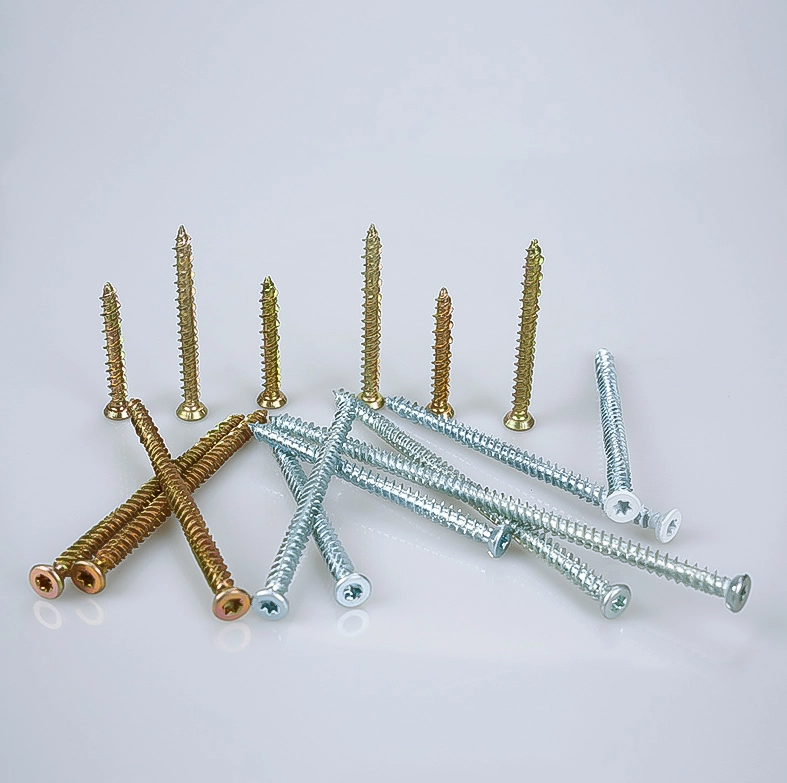
Qewit’s Torx CSK Head Concrete Screws get crafted for jobs needing flat fitting and firm weight passing. The sunken head lets the fastener rest smoothly on the face, while the Torx drive boosts twist handling during setup. And this pairing cuts back on slipping and thread harm, particularly in thick concrete.
In real use, this setup fits well for steel sheets, supports, tracks, and frame pieces where steady squeeze force counts more than sheer pull-out figures.
Versatile Thread Design For Stronger Grip
Thread layout directly shapes grip power and setup sensation. Stepped threads, complete threads, and cut profiles often get employed to boost bite in masonry stuff.
The Phillips Pan Head with Washer Concrete Screws from Qewit include full thread and stepped thread choices, paired with three cuts along the thread. These cuts aid in sweeping away debris while setting up, so the screw slices more neatly into the concrete.
Plus, the washer beneath the pan head spreads weight over a broader spot, which proves handy for thin metal, slim steel parts, and roof or cover setups. This approach helps avoid spot crushing and boosts lasting steadiness amid shakes.
Corrosion Resistance And Durability In Harsh Environments
Lots of masonry fasteners give out not from weight, but from weather exposure. Outside spots, damp insides, and factory settings all strain fastener covers.
Qewit concrete screws come made with covers picked for building jobs, not showy fittings. And when linked well to the setting, they keep thread wholeness and head toughness as time goes on. This cuts down upkeep rounds and drops the odds of unseen breakdowns under done surfaces.
What Are The Limitations And Challenges When Using Concrete Screws?
Although concrete screws bring obvious perks, they don’t fit every need. Knowing their bounds aids in dodging wrong use and pricey fixes.
Before checking out particular hurdles, note that most problems stem from poor setup or wrong item picks, not the fastener on its own.
Installation Challenges And Pre-Drilling Requirements
Concrete screws call for spot-on pre-drilling. Hole width, length, and cleanness all shape outcomes. A too-narrow hole ramps up setup twist and risks breaking the screw. Meanwhile, a too-wide hole weakens the hold.
Debris stuck in the hole can mess with thread link too. On rushed work sites, this prep often gets skimped, causing spotty results.
For workers familiar with hammer-driven anchors, this added prep might seem slower at the start, even if total setup time usually shortens when handled right.
Material Hardness Restrictions And Breakage Risk
Concrete screws do best in firm concrete and sturdy masonry. Super-tough concrete, badly set material, or thickly reinforced areas can heighten pushback during setup.
Without twist control, this might cause thread wear or head snap. Drive style factors in here, as Torx drives typically give sharper handling than Phillips ones, above all in packed bases.
That’s why Qewit supplies various head and drive picks, letting workers select by site setup instead of routine.
Cost And Labor Considerations Compared To Alternatives
Piece by piece, concrete screws might look pricier than simple expansion anchors. However, just looking at material price misses the bigger picture.
When you add in shorter setup time, neater pull-out, and less split bases, overall job cost tends to even out. Still, for super-heavy weights or key structural holds, old anchors or built-in setups may remain the go-to.
How Do Different Concrete Screw Head Designs Affect Performance?
Head style impacts beyond looks. It sways twist passing, fitting action, and weight spread.
Grasping these variances aids in pairing the fastener to the task, rather than jamming one style into all work.
Torx CSK Head Concrete Screws Performance Features
Sunken heads often suit spots needing level faces. The Torx CSK head blends neat fitting with better drive link.
Qewit’s Torx CSK screws permit stronger twist use with lower slip odds. This proves extra useful in deep sets or overhead work. Thus, you get a firmer, more foreseen tie without face harm.
These screws frequently serve in inside framing, rail systems, and design pieces where both toughness and looks count.
Phillips Pan Head With Washer Stability And Load Distribution
Pan head screws with built-in washers aim for face fitting. The broader press zone aids in spreading weight and cuts pull-through on slim stuff.
Qewit’s Phillips pan head concrete screws with washers commonly handle roof add-ons, wire paths, and light build ties. The washer also offsets small face bumps in concrete or block masonry.
This style works well, feels standard to workers, and stays simple to check post-setup.
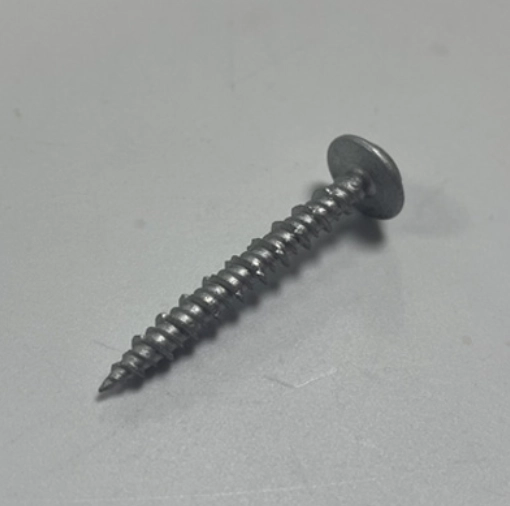
Phillips Pan Head Partial Thread Grip Characteristics
Partial thread setups center hold power nearer the end while easing shank slide by the head. This can help when tying stacked stuff where squeeze action matters.
The Phillips Pan Head Concrete Screws with partial hi-low threads and three notches strike a good mix of hold and setup smoothness. They often get chosen for tasks needing managed press without over-straining the top coat.
What Are Best Practices For Installing Concrete Screws In Masonry?
Solid fasteners still require solid setup ways. Tiny points make a clear change in results and life span.
Before listing exact habits, remember to view concrete screws as exact fasteners, not throwaway bits.
Proper Hole Drilling And Dust Removal Techniques
Stick to the suggested drill bit size and length for each screw. Bore straight, skip shaking, and sweep dust with air blasts or suckers when you can.
This basic move betters thread link and eases setup twist. It also drops early fail odds while tightening.
Torque Setting And Screw Seating Guidelines
Steer clear of over-twisting. After the screw fits snug, extra twist seldom boosts hold and could harm the tie.
Twist-managed drivers aid in keeping things steady, especially for big batches.
Use Of Complementary Fastening Components
In certain builds, concrete screws form part of a wider tie setup. Hexagon Connecting Nuts (DIN 6334) frequently serve to lengthen threaded ties or line up build parts.
Qewit’s coupling nuts get made with strict size checks, promising even link and sure weight pass when matched with concrete fasteners or threaded bars.
What Applications Are Ideal For Concrete Screw Fastening Systems?
Concrete screws don’t stick to one project type. Their bendiness fits many building and update cases.
Knowing prime spots for them aids in getting max worth.
Structural Masonry And Light-to-Medium Load Fixtures
Concrete screws handle brackets, props, and backup build parts well, where fair weights apply and exact placing counts.
Mechanical And Electrical Installations
Wire paths, pipe props, and air unit add-ons often gain from the neat setup and easy removal of concrete screws.
Facade And Exterior Attachment Solutions
With right cover picks, concrete screws routinely serve for outside wall systems, signs, and design touches.
FAQs
Q1: Are concrete screws reusable after removal?
A: Concrete screws can sometimes be reused, but holding strength may be reduced. For critical connections, replacement is recommended.
Q2: Do concrete screws work in brick and block?
A: Yes, but performance depends on material quality. Solid brick performs better than hollow block, and correct hole placement is important.
Q3: How deep should concrete screws be embedded?
A: Embedment depth varies by diameter and load requirement. Always follow product guidelines for safe performance.


