

caTEGORIES
Tags
Key Safety Tips for Installing Concrete Bolts: A Step-by-Step Guide
Posted: March 20, 2026
Categories: News
Securing a robust fixture firmly to a concrete slab demands more than physical effort; it involves choosing suitable hardware and understanding the material’s response to applied force. For workers on industrial locations or residential updates, the transition to concrete bolts—or concrete screws—has revolutionized practices, as they provide a mechanical hold superior to conventional anchors. Qewit, a British-owned vendor headquartered in China, has distributed these quality products internationally since 2004, merging Western design criteria with consistent production methods.
To achieve optimal performance, individuals must grasp why these fasteners serve as the primary selection for specialists and learn to manage them while avoiding frequent problems, such as fracturing the underlying material or managing broken heads.
Why Choose Concrete Bolts for Your Construction Projects?
Examining a typical expansion bolt reveals that it depends on a sleeve expanding against the hole’s interior surfaces, thereby producing substantial internal strain within the concrete. In contrast, concrete bolts operate differently; they form their own entry into the substance, akin to a wood screw entering lumber. Consequently, this self-tapping mechanism results in a tidier placement and a stable linkage evident from the initial rotation.
Superior Load Distribution Through Thread-to-Concrete Locking
The effectiveness of a concrete bolt stems from its threads, which possess a greater external diameter relative to the bolt’s primary body. As the bolt advances into position, these threads establish a secure interlock within the concrete, thereby spreading mass and pull evenly along the complete embedded area. Moreover, this method of force conveyance closely mirrors the function of ribbed rebar in a cast framework, delivering considerable shear and tensile resilience that withstands significant shaking.
Rapid Installation and Auxiliary Accessory-Free Design
Efficiency holds great value at any worksite, and concrete bolts gain recognition for their swift application, owing to their unified component structure. Installers need not manage distinct sleeves, lead shields, or adhesive compounds that require extended setting times. Rather, they simply bore the opening, remove residues, and insert the bolt directly, which minimizes equipment requirements and sustains workflow without avoidable pauses.
Reliable Detachability for Temporary or Adjustable Fixings
A primary frustration with standard anchors arises from their permanence after insertion, often demanding removal through abrasive methods. However, concrete bolts enable full withdrawal, offering substantial benefits for provisional barriers, formwork, or devices requiring relocation subsequently. Thus, extracting the bolt without harming the surface or attached element affords groups enhanced adaptability in the building stages.
Identifying the appropriate bolt constitutes the initial portion of the task, but comprehending the precise construction and caliber of the components distinguishes skilled outcomes from novice mishaps.
What Are the Essential Features of Qewit Concrete Bolts?
Given concrete’s far greater density compared to wood or plastic, a regular screw would fracture or lose grip if compelled into a pre-bored masonry cavity. Qewit engineers their fasteners with targeted material characteristics to cope with this intense resistance and load. Furthermore, their offerings endure the stringent “Western Style” requirements of the European sector while furnishing the affordability and diversity anticipated from a premier worldwide distributor.
High Hardness and Specialized Heat Treatment
The forward tip of a Qewit concrete bolt requires remarkable durability to penetrate the concrete and form those embedded threads. Producers attain this via meticulous heat processing that strengthens the steel sufficiently to slice through aggregate without inducing excessive fragility, where the head might detach amid fitting. Essentially, this refined interplay of technical knowledge and fabrication maintains the threads’ keenness and utility, even upon contact with denser inclusions.
Optimized Head Designs for High Torque Applications
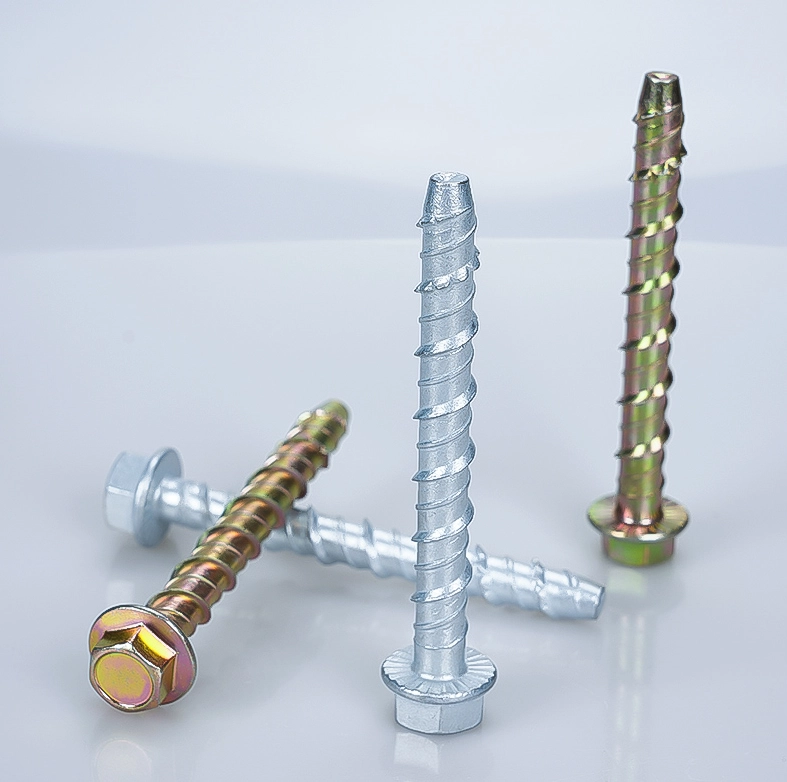
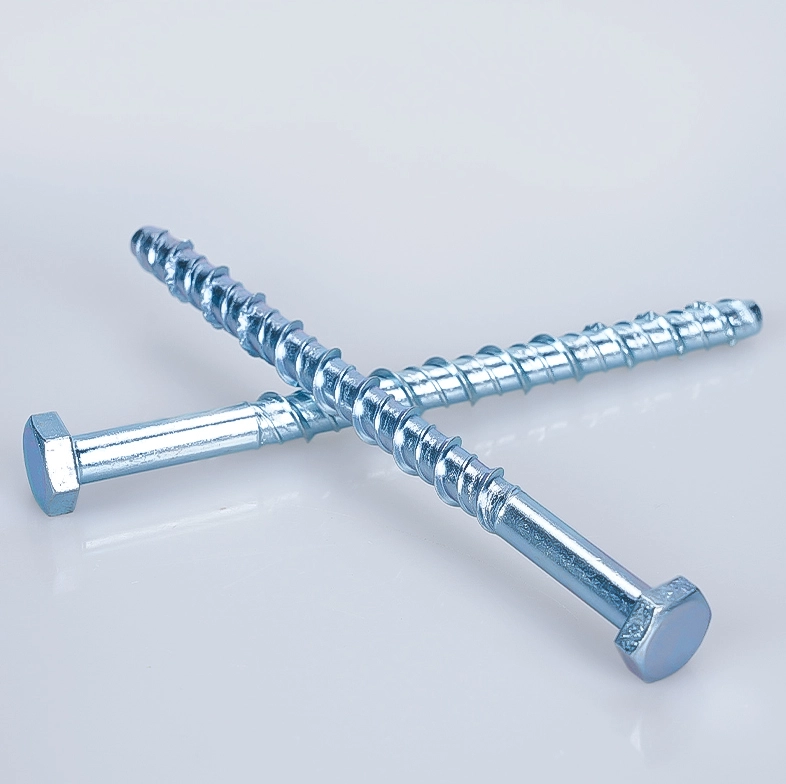
According to the object under attachment, experts may select among various head configurations to obtain adequate securing pressure. The Hex Flange Head Concrete Bolts enjoy widespread preference since the incorporated flange functions as an integrated washer, dispersing the burden across an expanded region to prevent the bolt from embedding excessively into the metal component. In narrower areas where a smooth alignment proves unnecessary, the conventional Hex Head Concrete Bolts supply generous contact surface for a drive tool or spanner to engage securely without slippage.
Comprehensive Quality Assurance and Certification
At Qewit, quality transcends simple terminology; it receives support from ISO 9001 validated procedures and a broad range of assessment resources. Each production lot undergoes optical scanners, corrosion evaluations through salt spray exposure, and load-bearing verifications to confirm endurance under substantial weights. For extensive trade agreements, the organization furnishes complete 3.1 certification along with PPAP level 3 documentation, enabling technical professionals to ascertain the exact steel type integrated into their structural bases.
Component attributes carry minimal significance if the operator at the drilling tool neglects to adhere to correct procedures for positioning the bolt properly within the base layer.
How Do You Ensure a Safe and Successful Installation?
Superior bolts available commercially may still malfunction should the opening deviate or if the fitter attempts to abbreviate preparation efforts. Concrete constitutes a sensitive, fragile substance that resists unexpected strain or thermal accumulation. Therefore, adhering to a reliable sequence—drill, clean, drive—remains the sole method to verify that the interlock materializes as engineered.
Precision Drilling and Proper Hole Preparation
The guide hole holds paramount importance; an overly narrow dimension risks bolt breakage, whereas an excessively wide one deprives the threads of purchase. Following boring to the appropriate depth, it becomes necessary to expel dust and particles, for retained matter can function as a barrier, prompting the bolt to bind midway through insertion. Seasoned applicators consistently bore marginally beyond the bolt’s extent to allocate space for residue displacement, thereby preventing premature obstruction at the end.
Careful Management of Hydrogen Embrittlement Risks
Among concealed hazards of potent steel fixings lies hydrogen embrittlement, capable of inducing bolt failure several weeks post-installation. Such an event transpires when hydrogen lodges within the alloy during surface treatment, thereby diminishing the steel’s malleability. Qewit addresses this diligently, particularly for fasteners surpassing HV 350 hardness, employing designated heat applications and evaluations to preserve flexibility amid prolonged stress.
Correct Tool Selection for Torque Control
Although it appears straightforward to drive an impact tool relentlessly until the bolt ceases advancement, excessive application can impair the newly created threads in the concrete. Opting for a precision-adjusted torque instrument or a motorized device featuring a responsive limiter assists in attaining the optimal balance, where the bolt secures tightly yet the concrete avoids disintegration. Qewit’s advisory personnel stand ready to recommend suitable torque values for their particular hex head variants across diverse concrete compositions.
Upon proficiency in the placement approach, these bolts unlock extensive opportunities for durable fastening in numerous fields.
Where Are These Heavy-Duty Fasteners Typically Applied?
Owing to their adept stress management and simple deployment, concrete bolts appear in diverse locales, ranging from tower foundations to garden terraces. Beyond isolated corrections, they integrate as core components in contemporary framework erection and facility preservation. Encompassing the immense pull forces in bridge fabrication to the exactness demanded for specialized apparatus, these fixings constitute an essential element of the profession.
Structural Engineering and Equipment Foundations
At expansive building areas, observers note these bolts anchoring machine platforms, conduit braces, and metallic supports. Their proficiency in enduring both tensile and lateral pressures—what specialists denote as tension and shear—positions them as a dependable choice for substantial equipment prone to oscillation during operation. In doing so, they furnish a steadfast fixation that inhibits the edifice’s framework from displacement across durations.
Installation of External Fixtures and Safety Guardrails
Passing by any veranda or thoroughfare, the restraining barriers there typically depend on expansion anchors or concrete screws for retention. Qewit’s bolts prove ideal for such purposes, delivering robust environmental shielding via coatings such as hot-dip galvanizing or zinc flake. Be it a shelter guarding a commercial facade or a protective barrier on a crossing, these bolts preserve the assembly against breezes, precipitation, and imposed masses.
Securing Essential Mechanical and Electrical Systems
A prevalent daily function for a Hex Flange Head Concrete Bolt entails positioning external air conditioner assemblies onto boundary walls. The flange head proves invaluable in this context, as it maintains bracket adhesion to the surface despite the persistent vibration from the compressor’s activity. Furthermore, they support enclosure frameworks and sizable illumination setups, guaranteeing that valuable devices remain fixed in their designated spots.
FAQ
Q1: Can concrete bolts be reused after they are removed?
A: Although these bolts allow detachment in principle, employing them again in the identical cavity poses difficulties, given that the preliminary placement has formed the interior threads. Should reuse proceed, it proves crucial to examine for thread degradation and substrate detachment, since the retention capacity could diminish upon subsequent use.
Q2: What is the difference between a hex head and a hex flange head bolt?
A: A conventional hex head necessitates an independent washer to safeguard the affixed surface. Conversely, a hex flange head incorporates that washer inherently, thereby simplifying the joining process and more effectively distributing force to avert bolt relaxation over intervals.
Q3: How do I know what size of concrete bolt to use for my project?
A: The dimension relies on the fixture’s depth and the burden it must support. Qewit supplies a spectrum from M3 to M60, and it remains advisable to review the burden specifications of the particular design scheme to confirm adequate effective anchorage depth within the concrete.


