

caTEGORIES
Tags
Stainless Steel Fasteners: Corrosion Resistance, Galvanic Corrosion and Installation Checks
Posted: November 05, 2026
Categories:
A clean screw head can be misleading. Down inside the same wet joint, its aluminum surround may already be pitting. Put grade and mating metals on the order.
Why stainless steel lasts in corrosive service
Why does stainless usually hold up well? Its surface carries a chromium-rich film, so thin that it isn’t visible. Given oxygen, the film can return after light damage. Zinc-coated carbon steel relies more directly on its zinc layer. A scratch in either product should therefore be considered in the context of the protection actually being used.
Lift the washer during inspection and check the hidden face. Choose for this small, hidden condition. The broad label ‘outdoor assembly’ is not precise enough. A sheltered crevice should therefore be treated as its own exposure zone, including the underside of a washer and the edge of a coated hole.
Galvanic corrosion is a system problem
The metal pair alone is not the trigger for galvanic corrosion. An electrical route must remain through the hardware, and there must be a conductive liquid. Rain carrying salt is one obvious example. Then consider scale. Now compare area: one small bare aluminum spot connected to a broad stainless surface can take a concentrated attack. The area comparison belongs on the joint review because it cannot be inferred from screw diameter alone.
Suppose a sleeve separates the metals under the head. The shank, a washer edge, or another fixing may still complete the circuit. The sleeve may even leave a place for water to collect. Mark the electrical route and the drainage route separately on the drawing. In the Qewit enquiry, replace ‘outdoor use’ with the moisture and temperature conditions at the joint.
| Check | Ask | Purpose |
| Environment | What wets the joint, and can it dry? | Shows the real exposure |
| Metal path | Which parts still touch electrically? | Finds a galvanic route |
| Exposed area | How much of each metal is bare? | Flags a severe area ratio |
| Installation | Which tool, speed, lubricant, and method? | Controls damage and galling |
| Lot control | What records identify an approved delivery? | Keeps supply traceable |
Installation damage can erase the material advantage
Plenty can go wrong before the fastener reaches service. A bit that doesn’t seat properly chews up the recess. Set the tool too high and either the thread gives way or the screw does. Stainless mating threads bring a separate nuisance. Friction can rise very quickly, metal transfers between the faces, and the pair locks while the joint is still loose. If galling appears during a trial, record when the resistance increased and inspect both mating threads before changing the tool setting.
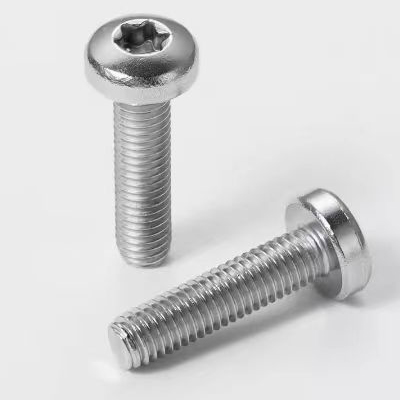
For DIN 7985 stainless pan head machine screws, prepare the internal thread first and put the specified driver on the job sheet. That internal thread may be in the component or a nut. Instructions about pilot holes apply only when the selected screw forms, cuts, or drills its own route. A similar head shape is no reason to copy those instructions across.
Procurement is shifting toward application evidence
Buyer matching and overseas sourcing featured at the September 26-28 China Hardware Fair in Yongkang. A sample from a meeting is useful when checking fit, but it isn’t an order specification. Purchasing still needs the agreed grade, dimensions, finish, and inspection paperwork in writing.
If an approved sample is retained, identify it clearly. Its evidence is limited: this particular piece fitted, and the intended tool installed it. Nothing about that trial proves the composition of a later shipment. Delivery documents and incoming inspection carry that part of the job. Keeping the sample with its order reference also prevents a good-looking loose piece from being mistaken for proof of a later lot.
Incoming and field inspection checklist
- First confirm what arrived. Compare the carton and fastener markings with the order. Gauge size and pitch, then match the papers.
- Hold mixed, damaged, or contaminated pieces for review.
- Run more than one piece through the production setup. Use the production setup for the trial.
- Inspect each mixed-metal contact after assembly.
- Inspect sooner in salt service or where access is poor.
Cost should be compared across service life
Include access and downtime in the comparison. In that location, the fastener’s purchase price is a small part of the bill. Dry, accessible indoor work can justify a less costly choice.
Keeping corrosion resistance and strength separate
‘Stainless’ is not a strength class. Match the quoted mechanical properties to the joint. Review nut and washer substitutions too. Mechanical documentation is especially important where the original hardened fastener carried a defined load or where the washer affects bearing on a soft panel.
Name the screw type first. For a machine screw, that mating thread is already present. Self-tapping and self-drilling products do part of that work during installation. Their hole notes therefore belong on another instruction. Record the setup that passed the trial. Investigate the setup and mating material after a failure.
Describing the environment at the fastening point
An outdoor site address is not much help at the fastening point. Describe salt, chemicals, drying, and inspection access at the fixing.
Staining belongs in the specification when appearance counts. A customer may reject a stained visible panel while its joint remains mechanically sound. Watch the parts before installation as well. Rusty racks and unidentified mixed bins can leave iron on a stainless surface. Keep lots traceable. Today’s bright sample is an appearance reference, not a prediction of service life.
Reviewing the mixed-metal interface
Mark the metal-contact route on the drawing. Check whether the shank bypasses the washer. A bracket or second screw may close the route elsewhere. Mark the drainage route separately. Recheck the stack when isolation parts are added.
Put these changes through design review. These additions can move the installed dimensions. Tightening may also slice the coating exactly where isolation was expected. Make one joint with production parts and inspect it after assembly. That shows what installation did. The remaining question is service. A dry trial cannot copy repeated wetting or salt deposits, so material selection and inspection still carry that risk. Where the procedure allows disassembly, compare the coating beneath the head and washer with the untouched surface nearby; fresh cuts are easier to see at this stage.
Approving lots and comparing replacement costs
Before release, tie the order to a designation, thread, stainless grade, finish, and document list. Tie the retained sample to that same record. A carton with an unfamiliar mark or dimension stays closed and off the line until purchasing resolves the difference. Traceability is rarely recoverable after unlike fasteners share a bin.
Avoid a fixed-life promise based on the material name. Cost access, removal, cleanup, and restart work. A wet joint behind machinery can justify the extra spend. An interior screw in plain reach may not. Specify inspection access and a repair route. Maintenance access may decide the result even when two candidate fasteners have similar purchase prices. Record that assumption so the comparison can be revisited if the equipment layout changes.
Frequently Asked Questions
Do stainless steel fasteners rust?
Yes. Localized attack remains possible where salt or contamination is held in a damp crevice. A brown mark isn’t conclusive, though. Check whether the stain is transferred iron.
Can stainless steel screws be used with aluminum?
Yes, after reviewing the complete connection. Where will it stay wet? How much aluminum and stainless is exposed? Does the sleeve or coating really interrupt contact after tightening? A dry fitting trial cannot answer any of those questions.
Why do stainless threads seize during tightening?
The thread surfaces rub as the joint is tightened. Control speed and surface condition, and review torque whenever lubricant changes.
Confirming the specification before ordering
A useful Qewit enquiry goes beyond diameter and length. Give Qewit the grade, mating metals, exposure, and installation method.


