

caTEGORIES
Tags
DIN 931 vs DIN 933 Hex Bolts and How to Choose the Right Thread Length
Posted: September 28, 2026
Categories: News
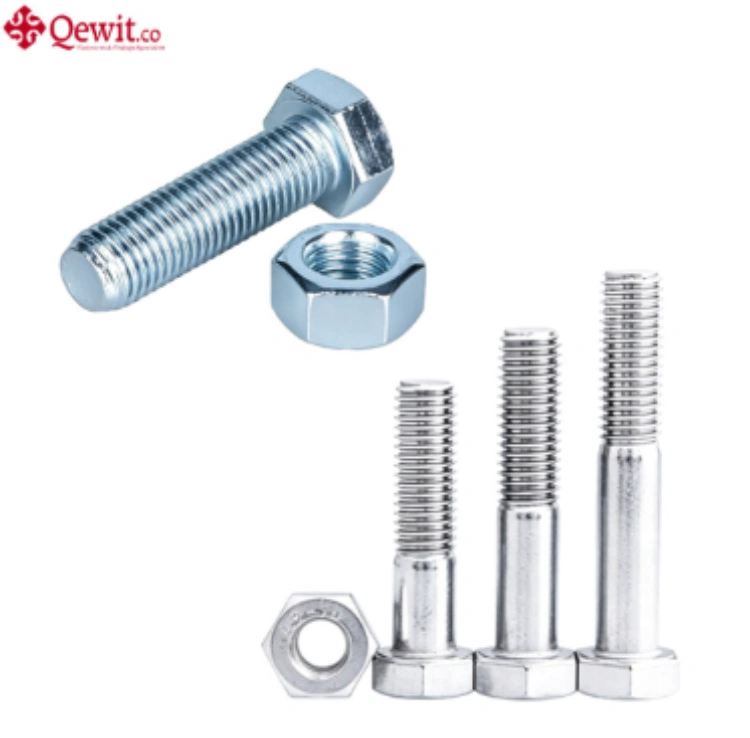
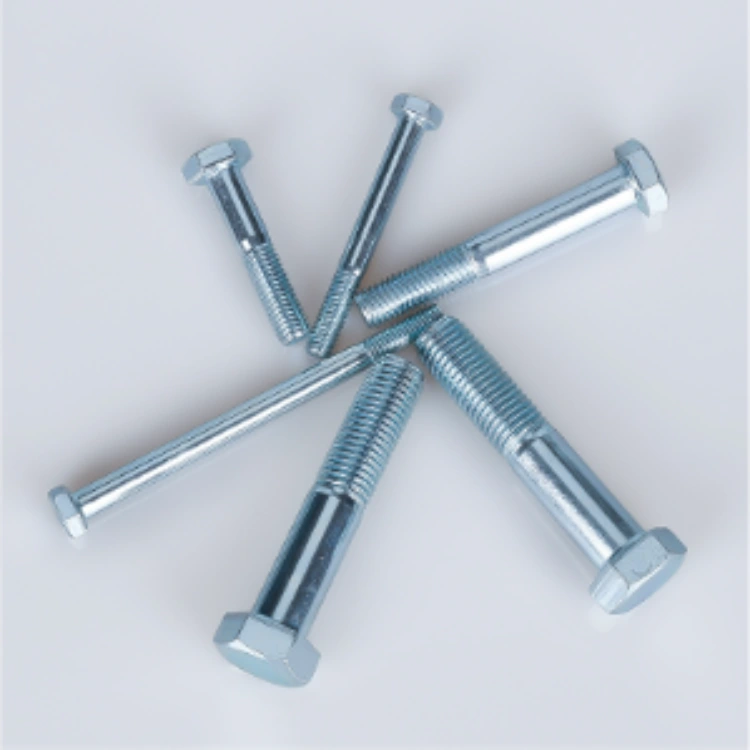
The main difference between DIN 931 and DIN 933 is thread coverage. DIN 931 hexagon head bolts are partially threaded, with a plain shank beneath the head. DIN 933 hexagon head screws are fully threaded, subject to the standard’s underhead and thread-end geometry. Choose between them by checking the joint thickness, required thread engagement, and position of any shear plane.
For purchasing teams, that distinction affects whether a fastener actually fits an assembly. Two bolts can have the same nominal diameter, length, and property class yet behave differently during installation because their threads start in different places. Neither designation alone establishes the strength or suitability of the complete joint.
Qewit supplies fasteners for industrial procurement, including DIN 931 hexagon head bolts. Before requesting a quotation, use the checks below to turn “partially threaded or fully threaded” into a specification that a supplier can verify.
DIN 931 and DIN 933 compared
DIN 931 and DIN 933 describe different hexagon head fastener geometries. Their commonly corresponding ISO standards are ISO 4014 and ISO 4017, respectively. Those pairings are useful starting points for sourcing, but they do not make every DIN and ISO item dimensionally identical.
| Selection point | DIN 931 | DIN 933 |
| Thread coverage | Partial thread with a plain shank | Full thread with underhead transition |
| Main fit check | Shank and thread positions within the joint | Engagement and underhead clearance |
| Common ISO counterpart | ISO 4014 | ISO 4017 |
| Strength specification | Specify material and property class separately | Specify material and property class separately |
| Purchasing detail | Confirm thread length for the selected size | Confirm usable threaded length |
Product names can also cause confusion. A supplier may call a DIN 933 fastener a “hexagon set screw.” In this context, it means a fully threaded hexagon head fastener, not necessarily a headless socket set screw. Put the standard and a drawing reference on the purchase order instead of relying on the product name alone.
Start with the thickness of the assembled joint
Thread selection starts with the grip: the stack of components that the fastener clamps together. For a through-bolted joint, record the connected parts, washers, nut, and required projection. For a tapped hole, record the available hole depth and the required engagement in the mating material.
Check where the plain shank ends
A DIN 931 bolt needs enough thread in the correct position for the nut to tighten against the joint. If the plain shank extends too far through a thin assembly, the nut can reach the thread runout before it clamps the parts. A nut that appears tight may therefore be stopping against the fastener geometry rather than developing the intended clamp force.
Do not estimate thread length from a catalog photograph. Thread length depends on the selected diameter, overall length, and applicable standard requirements. Ask for the dimensional drawing and compare it with the actual joint stack, including tolerances. Adding washers merely to accommodate an unsuitable bolt should not replace an approved joint specification.
Check engagement in a tapped hole
A fully threaded DIN 933 screw can be useful when threads must reach close to the head or when a short assembly offers little room for a plain shank. It still needs adequate engagement in the mating component. Engagement requirements depend on the materials, loads, thread geometry, and joint design; a single rule based only on bolt diameter is insufficient for every application.
In a blind hole, check bottom clearance as well. The screw must clamp the part before its end contacts the bottom or unusable portion of the hole. Include washers and countersinks in the dimensional review, and distinguish drilled depth from usable tapped depth.
Match the thread position to the load path
A plain shank can be useful where the design requires an unthreaded section at a shear plane. However, selecting DIN 931 hexagon head bolts does not automatically put that section in the right place. The interface between the connected parts must fall within the intended shank region after the complete assembly is tightened.
Consider an illustrative bracket assembly with two plates. If its drawing requires the plate interface to bear against a plain shank, the purchaser must verify the shank length against both plate thicknesses and any washers beneath the head. Buying a longer bolt without checking its thread length could move the thread transition to an unwanted position.
Fully threaded fasteners are not automatically unsuitable for shear, and partially threaded fasteners are not automatically stronger in every joint. The applicable design method may account differently for threads in the shear plane. Some joints transfer service loads through friction between clamped surfaces; others rely on bearing. The engineering specification must establish the intended behavior.
Property class is a separate decision. A dimensional designation such as DIN 931 does not, by itself, specify class 8.8, 10.9, or 12.9, nor does it establish structural approval. For stainless fasteners, specify the relevant stainless grade and strength designation rather than treating them as interchangeable with carbon-steel property classes.
Review DIN and ISO substitutions before ordering
An offer for ISO 4014 instead of DIN 931, or ISO 4017 instead of DIN 933, should trigger a dimensional comparison. For example, an M10 width across flats of 17 mm for the DIN versions and 16 mm for the corresponding ISO versions. This affects socket selection and can matter in assemblies with restricted access. It is a concrete reason to check replacement dimensions even when the nominal thread diameter matches.
Review the supplier’s drawing against the required standard and edition. Check head dimensions, thread pitch, length, thread length where applicable, and tolerances. Obtain drawing-owner approval where a substitution changes a controlled specification. “Equivalent” on a quotation should identify what has been compared rather than leave the buyer to assume complete interchangeability.
Specify material and finish independently
Once the geometry fits, select material and finish for the service environment. Indoor machinery, exposed equipment, and chemically aggressive environments can require different corrosion strategies. Stainless steel and coated carbon steel should be evaluated against the actual exposure and the mating materials, not chosen solely by appearance.
Coatings can also affect thread fit and tightening behavior. A finish change may alter friction, so an existing torque instruction should not automatically carry over to a differently coated or lubricated fastener. Use an approved tightening procedure for the complete bolt, nut, washer, and lubrication combination.
Qewit’s technical support information can support a discussion of inspection and testing needs. State which documents you require with the order, such as dimensional inspection results or material documentation, and confirm availability for the quoted product. A supplier’s general testing capability does not mean every shipment automatically includes every report.
Build an RFQ that prevents thread-length errors
A useful request for quotation makes the fit requirements visible before price comparison. Include:
- Standard and edition, plus an assembly or fastener drawing when available.
- Nominal diameter, pitch, and length measured from beneath the head.
- Required thread length or plain-shank position where the joint depends on it.
- Material, property class or stainless strength designation, and finish.
- Matching nut and washer requirements, including relevant standards.
- Quantity, packaging, identification, and required inspection documents.
- Permitted substitutions and the approval process for dimensional differences.
For an existing assembly, add photographs only as supporting information. A photograph cannot reliably establish thread pitch, property class, or hidden engagement. A measured sample and drawing give the supplier a much stronger basis for checking fit.
To compare available options, send Qewit your joint stack and fastener specification through its contact page. Ask for confirmation of thread geometry and any proposed DIN-to-ISO substitution before approving a production order.
Frequently asked questions
Is DIN 933 stronger than DIN 931?
The standard number alone does not answer that question. Compare material, property class, diameter, and the joint’s load path. Thread position can affect a specific shear calculation or fit condition, but full threading does not establish a universal strength advantage.
Can a DIN 933 screw replace a DIN 931 bolt?
It may fit some assemblies, but check the design requirements first. A fully threaded replacement removes the plain shank that the original joint may require at a bearing surface or shear plane. Matching diameter and overall length is only part of the review.
Are ISO 4014 and ISO 4017 exact replacements?
They are the commonly corresponding ISO standards for DIN 931 and DIN 933. Dimensional differences can exist, including head width across flats at certain diameters. Compare the specified editions and supplier drawings before approving a replacement.
Which bolt is better for a thin assembly?
A fully threaded fastener can provide useful engagement where a partially threaded bolt’s shank would extend too far. Confirm nut engagement, underhead clearance, projection, and any blind-hole bottom clearance. The correct choice is the one that satisfies the assembly drawing and tightening requirements.


