

caTEGORIES
Tags
How Screw Manufacturers Enhance Durability and Fight Corrosion
Posted: March 05, 2026
Categories: News
Fasteners serve as the core foundation for every industrial undertaking, yet they endure persistent assaults from natural forces. This applies equally to building sites positioned alongside shorelines or devices functioning within moist workshops, where oxidation has the power to convert a sturdy bond into a serious risk in mere hours. Experienced producers go beyond simple assembly of screws; they craft these components with resilience in mind to withstand harsh conditions over time.
Qewit, a firm under British ownership and boasting more than two decades of expertise, grasps that the lifespan of a screw commences far earlier than its insertion into any surface. Through careful attention to the composition of the alloy and the principles behind surface treatments, specialists in this field manage to extend the period before deterioration sets in, effectively delaying issues like rust and erosion.
Why Is Material Selection Critical for Fastener Longevity?
Picking the proper initial alloy forms a substantial portion of the challenge in ensuring lasting performance. If the underlying material falls short of requirements, then no elaborate protective layer will preserve the overall effort for an extended duration. Diverse applications call for unique properties in the fasteners deployed, and this variety underscores the importance of thoughtful choices from the outset.
High Tensile Carbon and Alloy Steels
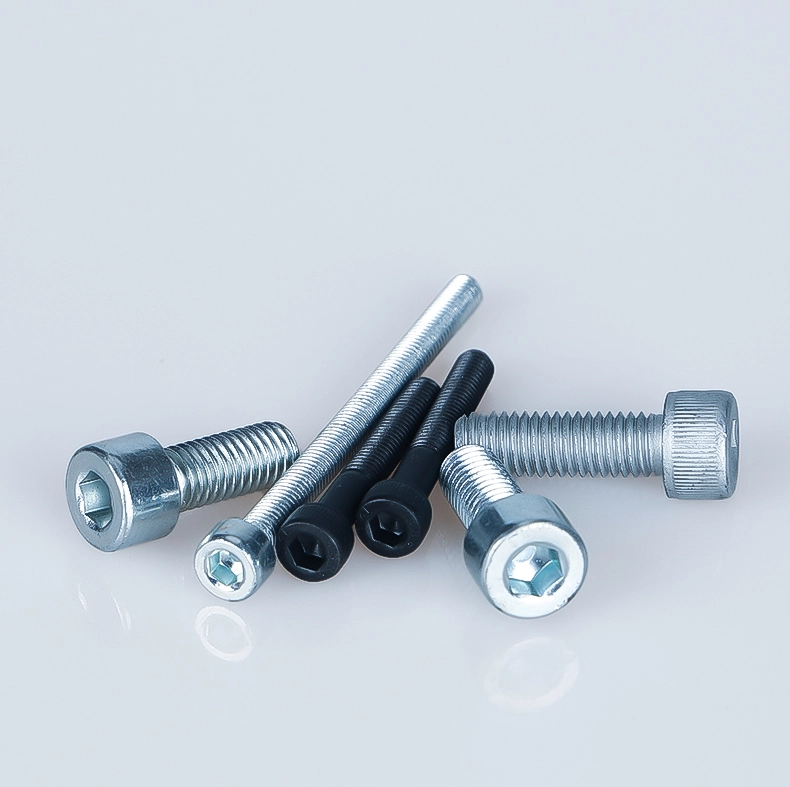
In typical strenuous factory operations, carbon steel emerges as the primary option due to its robust nature and economical value. Qewit concentrates on premium variants including 8.8, 10.9, and 12.9 steel, which hold particular value for products such as Hexagon Socket Cap Screws (DIN 912), since these must endure substantial pulling stresses without fracturing or altering form under pressure.
Corrosion Resistant Stainless Steel and Brass
Whenever humidity presents an ongoing hazard, producers opt for stainless steel or brass to provide superior safeguarding. Variants of stainless like A2 (304) and A4 (316) integrate chromium and nickel seamlessly into the mixture, offering an inherent shield against corrosion that extends throughout the entire structure. As a result, these selections stand out for oceanic or industrial chemical settings, in which standard steel would succumb within mere weeks.
Specialized Hardening Processes for Wood and Concrete
Ordinary screws typically prove insufficiently rigid for the most demanding bases. To remedy this, specialists employ thermal processing—such as surface strengthening—to render the exterior exceptionally firm while maintaining pliability at the center. Such approaches prove indispensable for CSK Hardened Single Thread Chipboard Screws, which require the ability to penetrate solid wood without the upper sections breaking away during application.
How Do Advanced Coatings Protect Against Environmental Decay?
Superior alloys still gain from supplementary defenses. Surface coverings operate as initial barriers, allowing external influences to target the outer layer first, and thus preserving the foundational metal intact for prolonged periods.
High Performance Zinc and Flake Finishes
The application of zinc stands as a benchmark in the sector precisely because it delivers consistent outcomes. Bright Zinc Plating (BZP) delivers a neat appearance along with reasonable shielding suitable for enclosed spaces. That said, when facing severe exposures, Hot Dipped Galvanizing (HDG) outperforms significantly, as it generates a substantial and resilient coating able to resist open-air conditions across many years.
Specialized Geomet and Dacromet Coatings
Within fields like vehicle assembly or upscale building projects, conventional coverings may occasionally fall short of needs. Treatments such as Geomet and Dacromet incorporate a blend of zinc and aluminum particles, which remain slim sufficient to avoid disrupting groove specifications, yet robust enough to withstand more than 1,000 hours in salt mist trials without any trace of reddish oxidation.
Decorative and Functional Surface Treatments
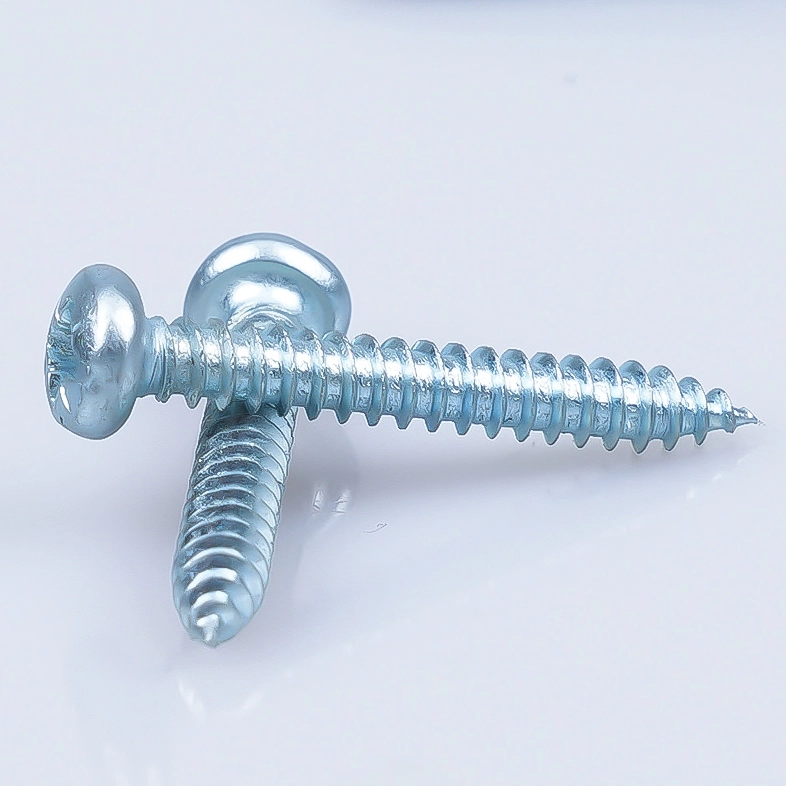
At times, a fastener demands both aesthetic appeal and dependable operation simultaneously. Black Oxide or Nickel coverings frequently find use on Pan Head Self Tapping Screws (DIN 7981C) intended for electrical assemblies or cabinet pieces. Even though these lack the toughness of HDG, they furnish adequate safeguarding for regulated settings, all while imparting a refined and upscale appearance.
How Is Quality Guaranteed Throughout the Supply Chain?
The value of a screw aligns directly with the testing facility that examines it. Dependable specialists avoid mere assumptions about product efficacy; instead, they validate it via a stringent series of evaluations conducted along the entire process.
Strict Adherence to International Standards
Observing DIN or ISO guidelines transcends basic protocol, as it represents a commitment to interoperability. Upon placing an order for a Hexagon Socket Cap Screw, buyers require assurance that it will align with their implements and sustain the designated forces. Qewit sustains ISO 9001 accreditation to confirm that all components—from an M3 washer to an M60 bolt—conform to these universal measures.
Comprehensive Internal Laboratory Testing
Reliability undergoes confirmation in controlled settings through equipment like mist chambers that replicate extended atmospheric exposure in compressed timeframes. Further assessments encompass Vickers rigidity evaluations and load-bearing apparatus to verify that the alloy avoids undue fragility or excessive suppleness. This concluding review method guarantees that only top-quality groups advance to distribution.
Traceability and Professional Certification
In essential ventures, casual reassurances prove inadequate. Specialists supply 3.1 alloy verifications and Initial Sample Inspection Reports (ISIR), which permit technical experts to follow a fastener directly back to its originating steel group. Such thorough records deliver absolute assurance in contexts where safety remains foremost.
What Design Innovations Prevent Premature Fastener Failure?
In certain instances, the endurance of a screw derives from its form rather than exclusively its composition. Clever structural attributes have the capacity to avert frequent difficulties like retreat from oscillations or wear from cyclic loading.
Anti-Vibration and Self-Locking Mechanisms
Within apparatuses that vibrate or relocate, screws inherently tend to withdraw. Qewit addresses this through dedicated elements like Nylon Insert Nuts (DIN 985) or Serrated Flange Nuts, wherein the polymer circle or the notched edges on the base secure the adjacent plane or groove, thereby mechanically preventing self-initiated rotation.
Precision Thread and Tip Geometry
The method by which a screw accesses the substrate carries significance. To illustrate, the CSK Hardened Single Thread Chipboard Screw incorporates a deliberate groove inclination designed to slice through timber strands rather than displacing them, which in turn lessens inherent pressures in the material and forestalls the fractures commonly associated with inexpensive, suboptimally configured alternatives.
Bespoke Engineering for Unique Applications
Not all issues permit standard resolutions. Qewit extends customized support to fabricate atypical fasteners drawing from precise schematics. This could entail applying a distinctive adhesive section to the grooves or devising a singular upper contour for enhanced safeguarding, ensuring the component aligns flawlessly with its designated surroundings.
FAQ
Q1: How do I know if I need Zinc Plating or Hot Dipped Galvanizing (HDG)?
A: The choice primarily rests on the location of screw deployment. Zinc plating (BZP) suffices for internal initiatives or arid zones. Should the undertaking involve exterior placements subject to moisture or coastal influences, HDG presents a far more reliable alternative owing to its notably denser and enduring covering.
Q2: Can stainless steel screws still rust?
A: Although stainless steel exhibits strong resistance, it does not achieve absolute immunity across all scenarios. Utilizing an inappropriate variant (such as A2) amid saline exposures might result in eventual surface marks or indentations. Hence, for shoreline or aquatic tasks, advancing to A4 (316) grade stainless secures the greatest endurance.
Q3: What is “Hydrogen Embrittlement” and why should I care?
A: This phenomenon constitutes a subtle peril wherein potent steel acquires brittleness and ruptures without warning from embedded hydrogen, typically arising post-treatment. To circumvent it, adept specialists apply dedicated annealing procedures following application or choose coverings like Geomet or Mechanical Galvanizing, which inherently sidestep this vulnerability.


