

caTEGORIES
Tags
How to Choose the Right Fastener Brand: A Performance Comparison
Posted: February 26, 2026
Categories: News
In the world of industrial manufacturing, fasteners are often the smallest items on a bill of materials, yet they carry the weight of the entire project. Picking a supplier isn’t just about who has the lowest price on a spreadsheet. It’s about finding a partner who gets the technical side of things and won’t leave you hanging when a shipment shows up with bad threads. Qewit has built its reputation by blending “Western Style” business management with the manufacturing value found in the Far East.
What Factors Determine Fastener Reliability?
Dependability for fasteners goes well beyond simple promotional phrases; it represents a quality that one can verify using records and solid facts. As you assess various brands, the primary element to review concerns their management of documents and inspection routines.
Strict Adherence to International Standards
Any brand worth its salt needs to follow the “rules of the game”—international standards like DIN, ISO, and ANSI. For instance, whether it’s a Metric Type T Nylon Insert Nut (DIN 985) or a standard Hex Nut (DIN 934), the product must meet specific dimensions and hardness levels. Qewit makes sure their goods conform to these relevant international standards so that when you try to fit a nut onto a bolt from a different batch, they actually work together.
Comprehensive Quality Assurance Facilities
You want a supplier that has their own “toys” for testing. Relying on a third-party lab for everything is slow and risky. A reliable brand uses equipment like Vickers Hardness Testers, Salt Spray Test Chambers, and Tensile Strength Testers to check every single batch before it leaves the warehouse. This in-house capability means if you have a concern, they can just grab a sample from the shelf and re-test it on the spot.
Advanced Certification and Reporting Capabilities
Standard certificates are fine for basic jobs, but for serious industrial work, you need more. Top suppliers can hand over 3.1 certifications to DIN-EN-10204 or ISIR (Initial Sample Inspection Reports). If you’re in a high-stakes industry like automotive, being able to get PPAP (Production Part Approval Process) up to Level 3 is a deal-breaker. It proves the supplier isn’t just lucky with one batch, but has a process that works every time.
Why Is Material Selection Critical for Performance?
You can have the best design in the world, but if the material is wrong for the environment, the fastener is going to fail. This is where a lot of buyers run into trouble by trying to save a few cents on the wrong grade of steel.
Diversified Material Options for Specific Environments
Different jobs need different “guts.” Sometimes you need the raw strength of Carbon Steel, and other times you need the corrosion resistance of Stainless Steel or the conductivity of Brass and Copper. Qewit offers a massive range, from general grade fasteners to high-grade alloys, making sure you aren’t using a “one-size-fits-all” approach to your builds.
Specialized Finishes for Enhanced Durability
The coating is the fastener’s “armor.” A standard Bright Zinc Plate (BZP) is great for basic rust prevention, but if your project is sitting outdoors or near the ocean, you’ll want something tougher like Hot Dipped Galvanized (HDG) or Zinc Flake. These finishes are tested for salt-spray resistance to make sure they don’t turn into a pile of rust after a few months in the rain.
Custom Manufacturing for Non-Standard Requirements
Most of the time, standard parts do the trick. But every now and then, you run into a project that needs a “weird” part that isn’t in a catalog. A brand that can handle bespoke non-standard products based on your specific drawings or samples is a huge asset. Whether it’s a special plating requirement like Black Oxide or a custom-machined shape, having a supplier that can do more than just pick items off a shelf is a lifesaver.
How Do Locking Mechanisms Prevent Connection Failure?
If things start vibrating, fasteners start loosening. That’s just physics. Choosing the right locking method is the difference between a machine that stays together and one that shakes itself apart.
Friction-Based Security with Nylon Inserts
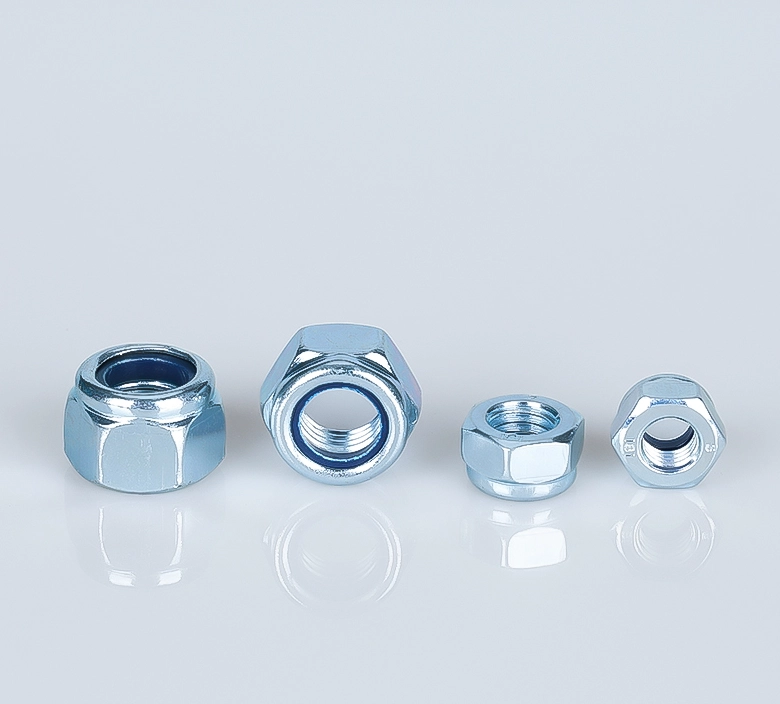
The Metric Type T Nylon Insert Nut (DIN 985) is a classic for a reason. It’s got a little nylon ring at the top that gets “squeezed” by the bolt threads as you tighten it. This creates a bunch of friction that keeps the nut from backing off even when things get bumpy. It’s an economical and reliable way to stop parts from falling off your equipment.
Mechanical Resistance through Thread Deformation
Sometimes nylon won’t cut it, especially if the environment gets really hot. In those cases, people go for All-Metal Lock Nuts. These nuts work by slightly deforming the threads or the shape of the nut itself, so it “bites” onto the bolt with serious force. They are super reliable in high-vibration spots, though you usually shouldn’t reuse them more than five times because that “bite” starts to wear out.
Surface-Level Protection with Serrated Flanges
Another way to keep things tight is using something like a Hexagon Serrated Flange Nut (DIN 6923). These have a wide base that acts like a built-in washer, which helps spread the pressure out. The “teeth” (serrations) on the bottom grip the surface of whatever you’re fastening, making it much harder for the nut to rotate the wrong way once it’s tightened down.
What Makes a Supplier a Strategic Partner?
At the end of the day, you aren’t just buying bolts; you’re buying a supply chain. A partner should make your life easier, not give you more headaches to manage.
Global Supply Chain and Consolidation Expertise
If you’re ordering 50 different types of fasteners, you don’t want 50 different boxes showing up at different times. A good supplier handles the “Supply Chain Management” from places like mainland China, Taiwan, and Vietnam. Qewit offers a consolidation service where they gather all your diverse items into one hub before shipping them out to you, which saves a ton on shipping costs and paperwork.
Responsive Technical Support and Samples
You shouldn’t have to be a fastener expert to get the right part. A brand that offers technical support can help you figure out which grade of steel or which finish is best for your specific use case. Also, being able to get free samples before you drop a massive order is a great way to “try before you buy” and make sure the fit and finish are exactly what you expected.
Flexible Logistics and Account Management
Business moves fast, and sometimes you need parts yesterday. Look for a supplier that keeps a stock of “Fast-Running Items”—the common stuff like DIN 934 nuts or DIN 933 screws—so they can ship them out within a week of you placing the order. Having a dedicated Account Manager who knows your business and can handle everything from quality control to shipping logistics makes the whole process “worry-free”.
FAQ
Q1: Can I use Nylon Insert Nuts (DIN 985) in high-heat engines?
A: This choice typically lacks advisability. The embedded nylon ring generally tolerates temperatures ranging from -50°C to 100°C. Should conditions exceed this limit, the nylon could yield or dissolve, resulting in diminished locking effectiveness. For zones with intense heat, opting for an All-Metal Lock Nut or a Spirax (30° wedge) nut yields better outcomes.
Q2: What is the difference between a Set Screw (DIN 933) and a Bolt (DIN 931)?
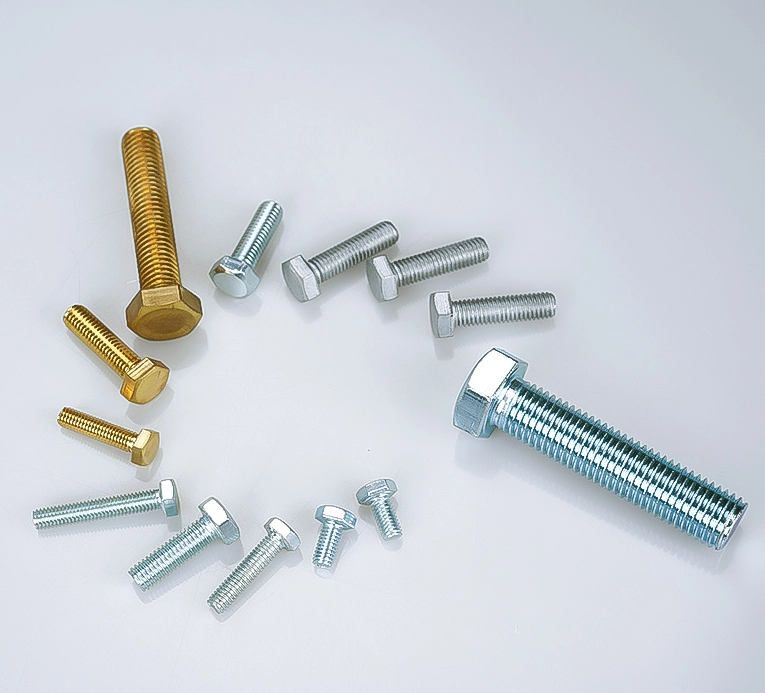
A: The variation primarily relates to the threading extent. A Hexagon Head Set Screw (DIN 933) maintains full threading extending from the head to the extremity. Conversely, a Hexagon Head Bolt (DIN 931) employs partial threading, incorporating a smooth shank portion close to the head. Consequently, bolts suit better for uniting substantial elements, capitalizing on the shank’s unyielding support.
Q3: Do I really need a 3.1 Certification for every order?
A: For constructing basic structures like a plain fence or an unimportant rack, such certification usually remains optional. However, when engaged in tasks with structural steel, substantial equipment, or situations where breakdowns might endanger safety, the 3.1 certification functions as essential protection. It attests that the materials underwent examination and correspond accurately to the acquired specification.


