

caTEGORIES
Tags
How Spring Washers Work: Key Steps to Ensure Proper Installation
Posted: January 30, 2026
Categories: News
Assembling robust equipment or a basic metal framework requires careful attention, and one major concern is a fastener loosening after minimal operation time. Factors like shaking, thermal variations, and regular motion challenge secure fastenings. Spring washers address these issues effectively. Although they resemble basic divided metal circles, numerous mechanical forces operate inside to maintain the stability of your constructions.
What Is the Core Mechanism of Spring Washers?
Grasping the function of these compact elements involves viewing them as small, firm elastic devices instead of plain separators. They do not merely remain idle; rather, they exert ongoing resistance against the securing element.
Elastic Deformation Providing Constant Tension
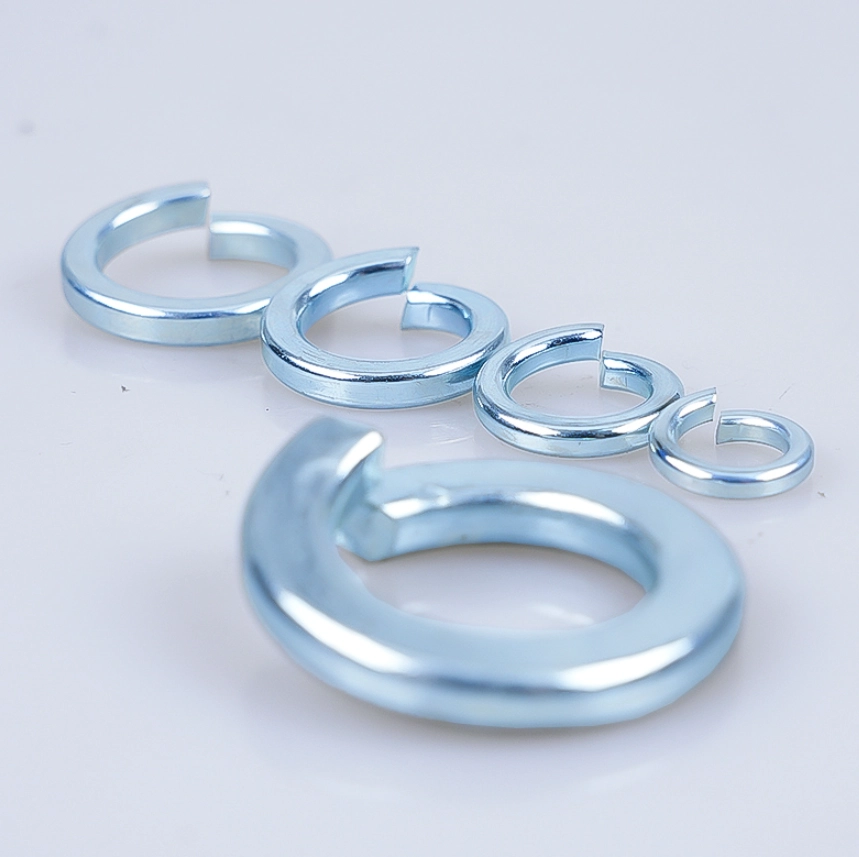
Consider a spring washer such as the Rect Spring Washers DIN 127B, which features a modest bend or arch. As you secure the nut firmly over it, this action compresses the bend. The material, driven by its inherent tendency to resume its prior form—termed elastic deformation—sustains steady upward force on the nut and steady downward force on the supporting surface. Consequently, this rebound action compensates for any small gaps arising if the fastener elongates gradually, thereby preserving the joint’s tightness over time.
Friction Enhancement Through Surface Contact
Securing elements typically loosen due to insufficient thread grip to resist outside influences. Incorporating a spring washer boosts this grip substantially. The persistent linear pressure from the washer’s elasticity compresses the fastener and nut threads far more securely than an ordinary flat washer could manage. As a result, this increased hold renders it considerably more difficult for the nut to initiate even the initial slight turn that might progress to complete detachment, thus improving the assembly’s endurance.
Sharp Edge Engagement for Mechanical Locking
Observing a DIN 127B washer closely reveals that its divided ends possess keen points. Upon compression, these points embed into the nut’s underside and the fastened component’s face. This action establishes a tangible grip or physical interlock. Comparable to a miniature fastener, if the nut attempts to rotate in the release direction, it must first surmount the opposition from those metal points firmly impressed into the surface, offering dependable prevention against movement.
Why Choose Qewit for Specialized Spring Washers?
Choosing appropriate components extends beyond selecting dimensions from a list; it entails assurance that the items will endure under demanding conditions. Here, the supplier’s foundation plays a pivotal role.
Integration of British Quality Standards
Qewit differs from standard distributors; it functions as a completely British-controlled entity that introduces a particular Western operational method to the production area. Therefore, its working guidelines derive largely from previous British executives who comprehend the stringent security and efficiency requirements of European and international sectors. This setup provides the trustworthiness of British supervision alongside the economical benefits of Asian fabrication.
Comprehensive Material and Finish Options
Work environments differ greatly; certain ones stay protected and arid, whereas others encounter marine and corrosive settings. Qewit spans this variety by supplying washers ranging from common carbon steel to superior stainless steel, brass, and copper. When corrosion poses the primary threat, they deliver protective layers including Zinc Plated, Hot-Dip Galvanized (HDG), and targeted Zinc Flake or Geomet applications capable of withstanding extensive salt spray durations.
Reliable Quality Assurance and Traceability
Confidence stems from precise awareness of component composition. Qewit upholds rigorous standards via ISO 9001 approved procedures. They substantiate quality through expert oversight and thorough tracking, rather than mere assertions. For requirements like a routine 3.1 certificate per DIN-EN-10204 or elaborate documents such as PPAP level 3 for vehicle or intensive industrial uses, the records exist to validate the items fully.
How Do DIN 127B and DIN 7980 Washers Differ?
Spring washers vary in construction, so selecting an unsuitable variant for a given fastener could result in insufficient strength or improper alignment with the opening.
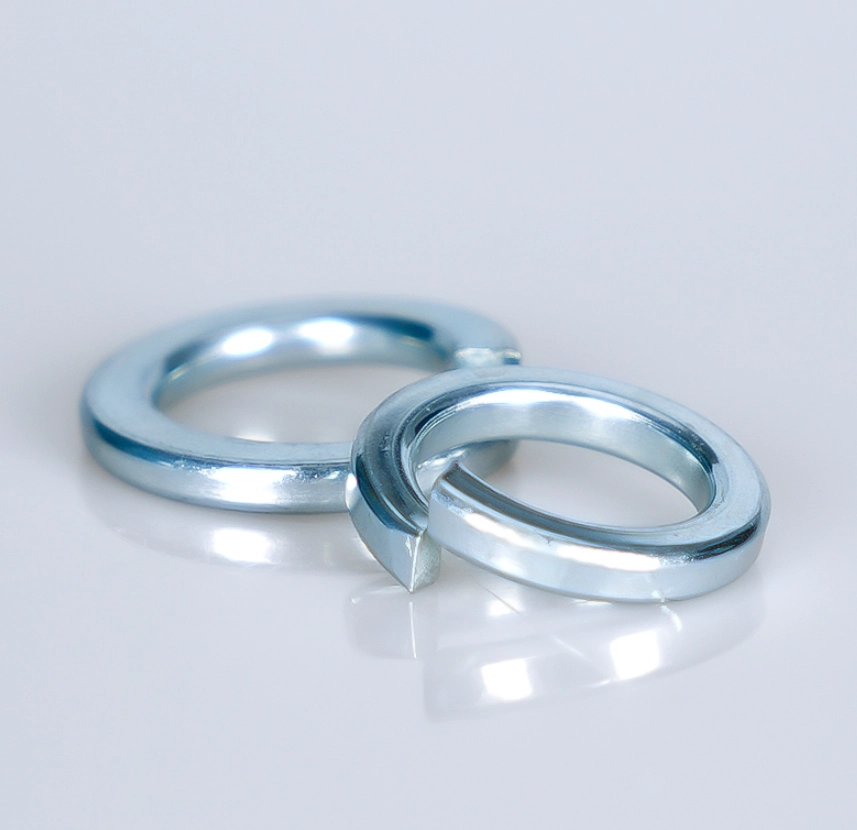
Rectangular Cross Section of DIN 127B
The DIN 127B represents the fundamental option in the sector. Its rectangular profile yields a broader base. Such an extensive contact zone aids in evenly distributing pressure on conventional fasteners. It serves as the preferred selection for typical building and joining activities involving standard hexagonal fasteners and mates.
Square Section Design of DIN 7980
The Square Section Spring Washers DIN 7980 cater to narrower applications. The designation indicates that the forming material consists of square sections rather than flattened rectangular ones. This configuration results in a more compact form overall. The significance lies in the fact that durable cap screws with sockets commonly position within counterbored recesses—indented areas in the base. A larger DIN 127B variant would fail to accommodate such limited clearance, whereas a DIN 7980 integrates smoothly.
Application Specific Load Handling
Their unique configurations influence tension management in distinct ways. Although DIN 127B demonstrates flexibility across uses, DIN 7980 frequently accompanies robust tension elements (such as Grade 8.8, 10.9, or 12.9) since its reduced profile copes with the substantial rotational stress needed for those fasteners without significant warping. The key is aligning the washer’s durability and measurements to the fastener’s operational traits.
What Are the Vital Steps for Proper Installation?
A superior Qewit washer performs poorly if oriented incorrectly or placed on contaminated areas. Achieving accurate placement holds equal weight to the material’s excellence.
Surface Preparation and Cleaning
For effective operation, a spring washer must adhere to the base material. Contaminants like dense lubricants, thick residues, or peeling layers cause it to slip. Thus, prior to commencing the process, cleanse the region surrounding the fastener aperture. This ensures the physical engagement occurs on the stable foundation, avoiding a superficial coating that might erode or yield subsequently.
Correct Orientation and Sequencing
Though straightforward in concept, this aspect often sees frequent errors. Typically, position the spring washer immediately below the element under rotation—most often the nut. A prevalent error involves placing a flat washer in the space between the spring washer and the nut. Doing so prevents proper embedding into the nut, thereby diminishing the locking function. Instead, apply the flat washer to the base for surface protection, with the spring washer positioned atop to secure the nut firmly.
Application of Recommended Torque
Secure the fastener adequately to compress the washer, yet avoid excessive force that eliminates its resilience. Over-applying torque risks deforming the spring washer past its recovery point, after which it ceases to resist. Conversely, insufficient tightening leaves the mechanism inactive. Utilizing a calibrated wrench and adhering to the prescribed values for the fastener’s classification maintains the washer within its optimal range, enabling it to withstand oscillations for prolonged durations.
How Can Qewit Support Your Project Requirements?
Conventional stock items may fall short in certain cases. Unusual space constraints or demands for particular surface treatments could necessitate adaptations.
Bespoke Product Manufacturing Services
Qewit excels by extending beyond elementary provisions. They fabricate irregular securing devices according to your precise designs or prototypes. Should requirements involve a spring washer featuring adjusted dimensions, distinct gauge, or dedicated sealing enhancements, their facilities accommodate such production. In practice, they function as a collaborative expert instead of a simple provider.
Global Supply Chain and Logistics Efficiency
Overseeing extensive initiatives involves coordinating diverse components. Qewit facilitates this through a no-cost aggregation option. They assemble your varied supplies—fasteners, mates, washers, and accessories—into a central location prior to dispatch. This approach minimizes transport expenses and alleviates the complexity of monitoring numerous consignments. Furthermore, their bases in Qingdao and Haiyan enable efficient global distribution.
Technical Support and Testing Facilities
Anxieties regarding standards or the necessity to demonstrate compliance to stakeholders find resolution at Qewit. Their internal laboratories encompass corrosion simulation units, load verification devices, and material firmness analyzers. In instances of batch uncertainties, they conduct prompt re-assessments and furnish visual documentation of the evaluations, allowing for assured continuation.
FAQ
Q1: Can I reuse a spring washer once it’s been tightened?
A: Generally, it’s not a great idea for critical joints. Once a spring washer has been fully compressed and exposed to heat and vibration, it might lose some of its original “springiness” or the sharp edges might get worn down. For a simple home project, it might be fine, but for industrial or safety-critical work, always use a fresh one to be safe.
Q2: Which way does the split in the washer face?
A: The split in a DIN 127B or DIN 7980 washer is angled so that the sharp edges “dig in” when you try to loosen the nut. There isn’t a “top” or “bottom” in terms of the split itself, but you should ensure the washer is sitting flat against the nut so that the pressure is even all the way around.
Q3: Why would I use a Zinc Flake finish instead of standard Zinc Plating?
A: Standard Zinc Plating is fine for indoor use, but Zinc Flake (like Geomet or Magni) offers way better corrosion resistance without the risk of “hydrogen embrittlement”—a fancy term for metal getting brittle and snapping. If your spring washers are high-strength and going to be outdoors, Zinc Flake is the much safer bet.


