

CATEGORÍAS
Etiquetas
¿Tornillos para paneles de yeso de rosca gruesa o fina? Elija según el material del montante y el tipo de trabajo.
Publicado: 27 de agosto de 2026
Categorías: Noticias
Etiquetas: noticias
Para la mayoría de los trabajos de paneles de yeso, el material de la estructura debe ser el factor determinante. Los tornillos para paneles de yeso de rosca gruesa suelen combinarse con montantes de madera, ya que la mayor separación entre las roscas penetra en las fibras de la madera con menos giros. Las roscas finas son más adecuadas para estructuras metálicas de calibre ligero, donde una menor separación entre las roscas proporciona mayor agarre al tornillo en el metal delgado. Sin embargo, el tipo de rosca es solo el punto de partida. Antes de realizar el pedido, es necesario verificar la longitud del tornillo, el diseño de la punta, la forma de la cabeza, el grosor del panel, el volumen de instalación y el estado de la estructura.
Para los compradores que necesitan varios tipos de tornillos bajo un mismo programa de abastecimiento, Qewit Suministramos elementos de fijación para madera, metal, construcción y montaje industrial, con asistencia técnica, control de calidad, piezas personalizadas no estándar y muestras de preproducción o preenvío disponibles para la revisión del proyecto. Nuestra gama de productos incluye tornillos para madera y paneles de yeso, así como tornillos autorroscantes/perforantes, lo que permite comenzar el análisis según el sustrato y el método de instalación, en lugar de imponer un único tipo de tornillo para cada proyecto.
¿Qué tipo de rosca de tornillo para paneles de yeso debo elegir para cada material de montante?
La forma más rápida de acotar las opciones es preguntarse qué hay detrás del panel de yeso. La madera y el acero delgado no sujetan un tornillo de la misma manera, por lo que no se debe esperar que la misma geometría de rosca funcione igual en ambos.
| Condición de trabajo o de semental | Dirección recomendada | Razón principal | Comprueba también |
|---|---|---|---|
| Montantes de madera | Hilo grueso | Un mayor espaciado entre hilos activa las fibras de la madera. | Longitud, punta, acabado |
| Pernos de metal de calibre ligero | Hilo fino | Un espaciado de rosca más estrecho es adecuado para metales delgados. | Espesor del metal, tipo de punta |
| Estructura de madera repetitiva | Hilo grueso cotejado | Reduce la manipulación individual de tornillos | Compatibilidad de herramientas |
| Metal que requiere perforación directa | Tornillo autorroscante | Taladrar y roscar en una sola operación. | Espesor del acero y tipo de cabeza |
Los tacos de madera prefieren roscas gruesas más anchas.
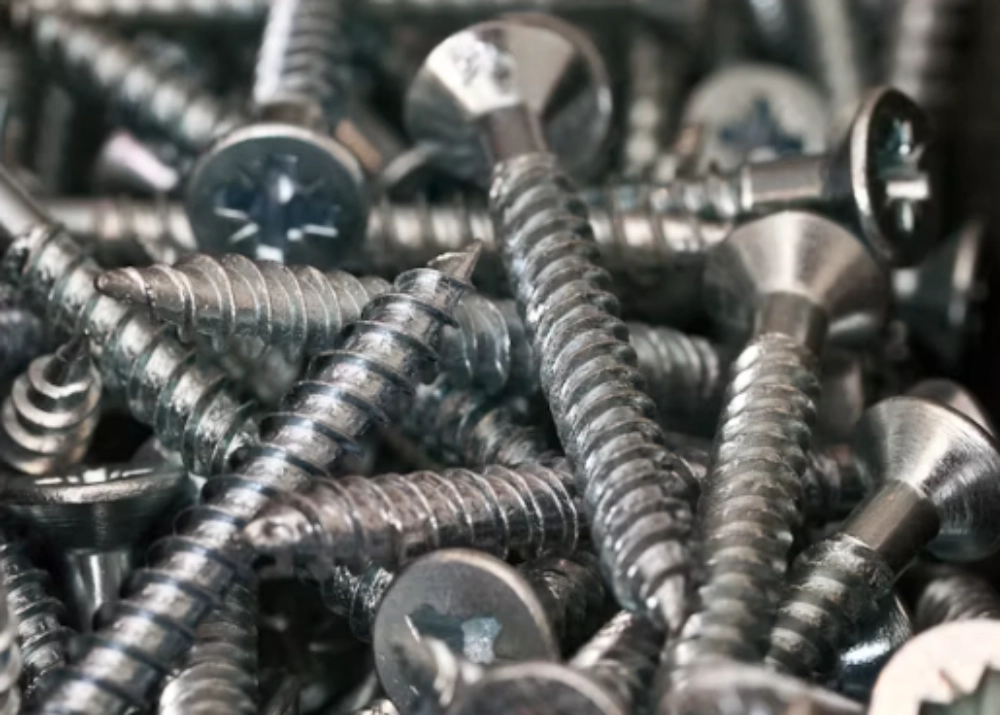
Para los tornillos de paneles de yeso en montantes de madera, la rosca debe penetrar en un material fibroso en lugar de encajar en una pared metálica delgada. Un paso de rosca mayor permite que cada rosca tenga más espacio para entrar y desplazar la madera. Por eso, los tornillos de rosca gruesa para paneles de yeso se suelen especificar para estructuras de madera. El mayor espaciado también implica menos giros de rosca a lo largo de una longitud determinada, lo que puede hacer que el atornillado repetido sea más eficiente.
de Qewit Tornillos de pared seca de cabeza de Phillips Csk con certificación CE Esto resulta útil porque la misma familia de productos ofrece versiones con rosca gruesa y fina, en lugar de considerar los tornillos para paneles de yeso como una geometría fija. La página de productos de Qewit muestra roscas gruesas para quillas de madera y roscas finas para quillas de acero ligero.
Los pernos de metal de calibre ligero prefieren roscas más finas.
Con tornillos para paneles de yeso de rosca fina para montantes metálicos, la tarea es diferente. Un perfil de acero delgado ofrece mucha menos profundidad que un montante de madera. Un espaciado de rosca más ajustado proporciona mayor agarre en ese espesor limitado. La elección aún depende del calibre del acero y la punta del tornillo, por lo que "metal significa rosca fina" debe considerarse como un primer filtro, no como la especificación final.
Para los lectores que deseen una explicación más básica lado a lado de las dos formas de hilo, la guía anterior de Qewit sobre Tornillos para paneles de yeso de rosca gruesa frente a tornillos de rosca fina Este artículo abarca la comparación general. Da un paso más allá al relacionar el formato de la rosca, el punto y la instalación con el trabajo específico.
Algunos trabajos de metal requieren más que un simple cambio de rosca.
Una rosca fina no puede sustituir a una broca cuando el tornillo debe penetrar el acero por sí solo. Los tornillos autorroscantes integran la perforación y el roscado en una sola operación, eliminando la necesidad de perforar previamente en estructuras metálicas.
Esa distinción es importante para los compradores que comparan tornillos autorroscantes para montantes metálicos con tornillos normales para paneles de yeso. Primero, verifique si el tornillo solo necesita fijarse a una ligera quilla metálica o si debe perforar completamente la conexión metálica.
¿Por qué los hilos gruesos y finos se comportan de manera diferente en madera y metal?
La diferencia no es estética. Cambiar el paso de rosca modifica la forma en que el tornillo penetra en el sustrato, la cantidad de roscas que lo engranan y la velocidad de avance del tornillo.
Cambios en el paso de rosca Compromiso del material
Los pasos de rosca gruesos estándar oscilan entre 2,82 y 3,18 mm, mientras que los pasos finos van de 1,5 a 2,1 mm, lo que modifica significativamente la resistencia a la conducción y el agarre mecánico.
Con los tornillos para paneles de yeso de rosca gruesa, la mayor distancia entre las roscas facilita que cada una penetre en la madera, en lugar de que varias roscas poco profundas se acumulen en la misma sección. El paso fino cumple una función diferente, ya que aumenta la frecuencia de contacto en metales delgados.
La resistencia al accionamiento y la velocidad de instalación varían con la rosca.
Un paso de rosca mayor permite un mayor avance por cada giro. En la carpintería, esto puede reducir el número de giros necesarios para atornillar. La geometría de rosca gruesa reduce significativamente la resistencia al atornillado, lo que permite que el tornillo desplace las fibras de la madera y se asiente más rápidamente con menos giros.
La velocidad aún debe evaluarse a nivel de proyecto. Un tornillo que se atornilla rápidamente pero que no se ajusta al sustrato genera retrabajo en lugar de ahorrar tiempo.
El rendimiento de sujeción depende del sustrato, no solo de la densidad de la rosca.
Más roscas no significan automáticamente mayor poder de sujeción. La clave está en cómo la rosca se acopla al material. Los tornillos para paneles de yeso de rosca gruesa dependen de su mayor anchura para sujetar la madera, mientras que las versiones de rosca fina están diseñadas para mantener el agarre en metales más delgados. El diámetro del tornillo, la profundidad de penetración, el estado del sustrato y el grosor del panel también influyen en la conexión.
Por eso, en las especificaciones de adquisición se deben evitar afirmaciones sin fundamento, como que un hilo es un porcentaje fijo "más resistente" que otro, a menos que se disponga de datos de prueba para el ensamblaje exacto.
¿Qué más debería comprobar además de si las roscas son gruesas o finas?
Una vez que se conoce la dirección básica de la rosca, varios detalles secundarios pueden hacer que un tornillo que de otro modo sería correcto resulte inadecuado.
El diámetro, la longitud y la sección roscada del tornillo deben coincidir con el conjunto.
Antes de elegir la longitud, verifique el grosor del panel de yeso, el número de capas, el material de los montantes y la penetración requerida. La gama de tornillos para paneles de yeso de Qewit incluye versiones de rosca completa y media rosca, y ofrece múltiples opciones de diámetro y longitud.
Para tornillos de paneles de yeso para montantes metálicos o de madera, comprar un tornillo más largo "por si acaso" es una mala práctica. Una longitud excesiva aumenta la penetración innecesaria, mientras que una rosca demasiado corta hace que la conexión dependa de la longitud del tornillo.
El diseño del cabezal y la punta afecta la calidad de la instalación.
La cabeza debe asentarse sin perforar la superficie del panel de yeso. La geometría avellanada o de tipo corneta distribuye el asentamiento de forma más gradual que una cabeza que se detiene bruscamente sobre la superficie del panel. Diseñados con un perfil cónico que se asienta a ras de la superficie de trabajo sin dañar el papel, estos tornillos para paneles de yeso utilizan una cabeza avellanada estándar de 90° y una ranura Phillips.
La punta también debe coincidir con el marco. Una punta autorroscante afilada puede servir para la fijación estándar de paneles de yeso, pero la perforación directa a través de acero requiere una estructura de punta diferente.
El material y el acabado deben ser adecuados para el entorno de servicio.
Los acabados en acero al carbono, acero inoxidable, fosfatado, zincado y zinc escamado no son intercambiables. El entorno debe ser la prioridad. Los interiores secos no generan la misma corrosión que las áreas de servicio húmedas o las conexiones metálicas expuestas. Los materiales de Qewit incluyen opciones en acero al carbono e inoxidable, junto con diversos procesos de acabado, para que los compradores puedan especificar el acabado independientemente del tipo de rosca.
¿Cuándo es más conveniente utilizar tornillos en tira o autorroscantes?
La selección de la rosca responde a la pregunta de qué tipo de rosca debe sujetar el sustrato. El formato de instalación responde a la pregunta de cómo se llevará a cabo el trabajo.
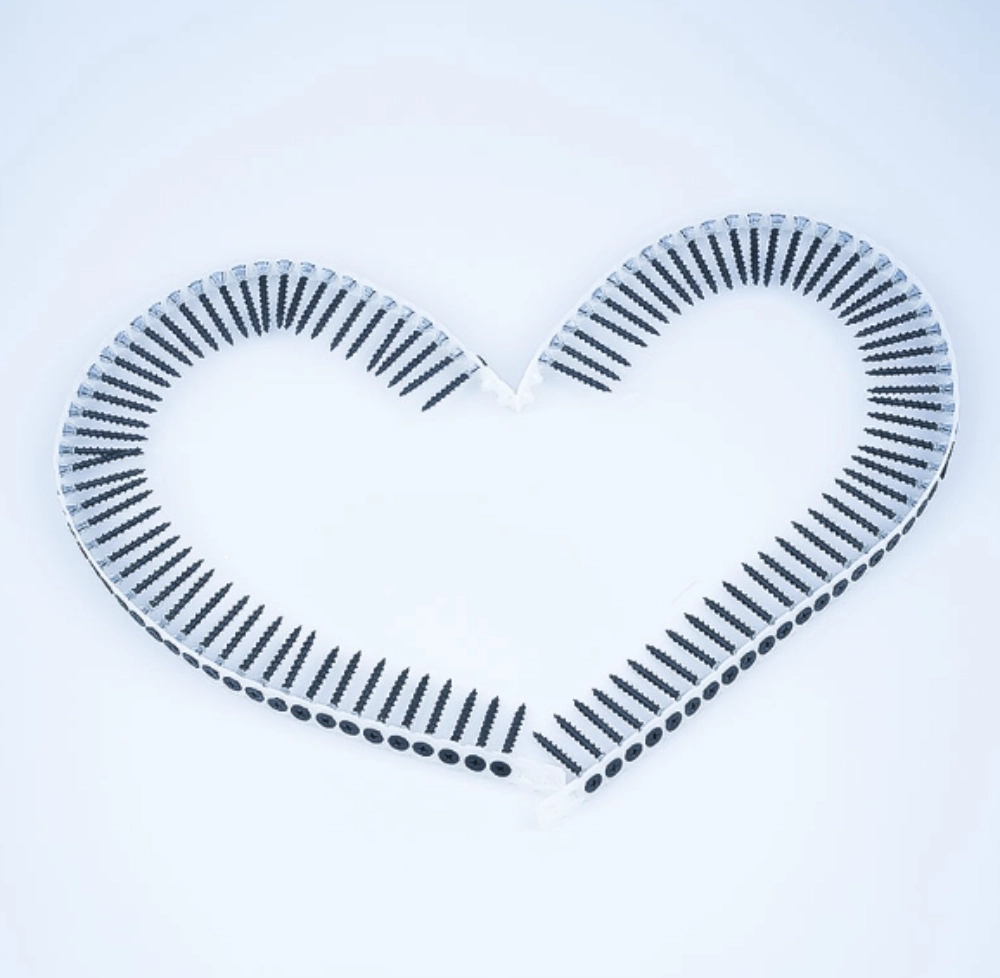
Tornillos de rosca gruesa en tira para trabajos repetitivos de carpintería.
Para tramos largos de tabiques u otras fijaciones repetitivas, manipular los tornillos sueltos uno por uno se convierte en parte del ciclo de trabajo. Los tornillos para paneles de yeso vienen preensamblados en tiras de plástico de 50 unidades, lo que permite un atornillado automático continuo para el montaje de tabiques a gran escala. La atornilladora correspondiente los alimenta secuencialmente, eliminando el paso repetitivo de colocar cada tornillo suelto en la punta del destornillador.
El Tornillo de pared seca colado de rosca gruesa Utiliza acero endurecido C1022, ranura Phillips, punta afilada, rosca gruesa y cabeza avellanada. Para quienes buscan tornillos para paneles de yeso en tira para estructuras de madera, la principal ventaja reside en la combinación de una geometría de rosca adecuada para madera con un formato de alimentación diseñado para instalaciones repetitivas.
Los tornillos estándar para paneles de yeso cumplen con los requisitos para madera y acero ligero.
Un contratista o distribuidor que maneje ambos tipos de estructuras puede necesitar mayor flexibilidad que la que ofrece un único modelo de rosca gruesa. La gama estándar de tornillos para paneles de yeso Qewit ofrece configuraciones de rosca gruesa y fina, además de opciones de rosca completa y parcial. Esto facilita la creación de un surtido adaptado al sustrato, en lugar de considerar todos los tornillos como intercambiables.
Los tornillos autorroscantes son adecuados para conexiones metálicas que requieren penetración directa.
Cuando la conexión requiere que el sujetador perfore a través del acero, Tornillos de perforación automática de rosca de la cabeza de la máquina plateada con zinc son la categoría más relevante. El producto utiliza una cabeza avellanada, accionamiento Phillips, rosca de máquina y punta autorroscante, y está diseñado para quillas de acero ligero, láminas de metal delgadas y conexiones compuestas de metal a madera.
Las puntas de broca diseñadas con precisión permiten la penetración directa en acero de hasta 2,5 mm sin necesidad de perforación previa.
¿Qué deben confirmar los compradores antes de pedir tornillos para paneles de yeso al por mayor?
Una solicitud de cotización clara ahorra más tiempo que intentar solucionar las deficiencias en las especificaciones una vez que llegan las muestras o la producción. Proporcione primero al proveedor las condiciones reales de ensamblaje.
Defina el sustrato, las dimensiones, la rosca, la punta y el acabado.
Una solicitud de compra práctica debe indicar:
- estructura de madera o metal;
- espesor del metal, cuando corresponda;
- Espesor del panel de yeso y número de capas;
- diámetro y longitud del tornillo;
- hilo grueso o fino;
- rosca completa o parcial;
- punta autorroscante o autoperforante;
- Tipo de cabezal y accionamiento;
- material y acabado;
- Embalaje suelto o agrupado.
Esto también evita que se especifiquen tornillos para paneles de yeso de rosca gruesa simplemente porque son comunes. El tornillo debe seguir el proceso de ensamblaje.
Verificar la documentación de calidad y el soporte de suministro
Para pedidos B2B recurrentes, el control de especificaciones es fundamental más allá de la primera muestra. La fabricación se rige por los protocolos de garantía de calidad certificados ISO 9001, respaldados por inspecciones de lotes de ciclo completo y pruebas de laboratorio. Los compradores también pueden verificar los pedidos a granel mediante muestras previas a la producción o al envío, producción personalizada según planos y documentación estándar (como la certificación 3.1, ISIR o PPAP), cuando corresponda.
Los compradores deben especificar qué documentos se requieren para el pedido exacto, en lugar de asumir que todos los documentos se aplican automáticamente a todos los tornillos.
Utilice el soporte técnico y póngase en contacto con nosotros antes de la especificación final.
Si su proyecto combina montantes de madera, acero ligero, tableros de diferentes espesores o instalación en tira, envíe los detalles del sustrato junto con la longitud, punta, acabado, formato de embalaje y cantidad de pedido de los tornillos requeridos. El equipo técnico de Qewit podrá revisar la dirección de fijación antes de la producción. Para planos, muestras, requisitos de documentación o un plan de compra de SKU mixtos, utilice el proyecto. contacto canal con esos detalles ya preparados.
Los tornillos para paneles de yeso de rosca gruesa siguen siendo el punto de partida práctico para la construcción con entramado de madera, pero una buena especificación va más allá: haga coincidir la rosca con el montante y, a continuación, verifique la longitud, la punta, la cabeza, el acabado y el formato de instalación antes de realizar el pedido.
Preguntas frecuentes
¿Son mejores los tornillos para paneles de yeso de rosca gruesa para los montantes de madera?
Sí, generalmente son la rosca más adecuada para montantes de madera, ya que la mayor separación entre los dientes se adhiere eficazmente a las fibras de la madera y avanza con menos giros. La longitud y la penetración del tornillo deben coincidir con el tamaño del tablero y la estructura.
¿Qué tornillos para paneles de yeso debo usar para montantes metálicos de calibre ligero?
Los tornillos para paneles de yeso de rosca fina se suelen usar para montantes metálicos de calibre ligero, ya que su rosca más compacta proporciona mayor agarre en metal delgado. Si la conexión requiere que el tornillo atraviese acero, compruebe si se necesita una punta autorroscante.
¿Los tornillos para paneles de yeso en tira solo son útiles para grandes proyectos de construcción?
No. Su principal ventaja radica en reducir la manipulación individual de tornillos durante la instalación repetitiva. Son más útiles cuando existe suficiente trabajo de fijación repetitiva como para justificar el uso de una atornilladora en tira compatible, ya sea en una obra grande o en un flujo de trabajo de producción más pequeño.


