

CATEGORÍAS
Etiquetas
Key Differences Between Concrete Bolts and Masonry Screws You Need to Know
Publicado: March 26, 2026
Categorías: Noticias
When you need to secure heavy brackets, industrial machinery, or even basic window frames into firm stone or concrete, selecting the proper hardware goes beyond mere dimensions. It involves how that metal component grips the base material and remains secure. Many workers in construction often mix up the terms “concrete bolt” and “masonry screw,” yet if you examine the technical details behind them—and the particular products from a provider like Qewit—you will notice they serve quite distinct purposes.
Grasping these subtle distinctions forms the core of managing supplies for industrial materials. Whether you deal with standards influenced by British practices or obtain cost-effective options from Eastern sources, the actual construction of these fasteners decides if your work holds firm or collapses under strain.
What Are the Fundamental Differences in Product Structure?
Prior to inserting any fastener into a surface, you must consider its material composition. A typical wood screw features a soft and pointed shape, but a fastener designed for concrete stands apart as a robust item. These are not simple rods; rather, they function as intricate devices with sections that manage from the first penetration into the stone to the ultimate support for the load.
Core Components and Functional Sections
A reliable concrete screw, like those detailed in the Qewit knowledge base, typically consists of five main parts. The pointed end serves as the initial cutter that forms threads inside the concrete, whereas the central section supports the weight of the attached item. Since the useful embedding depth counts solely from the threaded area, the screw requires extra length beyond the precise hole depth needed for the load.
Specialized Thread and Head Designs
The key feature lies in the thread width, which exceeds the inner core of the bolt significantly. This setup produces a secure interlocking where the concrete encases the metal firmly. Based on the equipment available, you could select a Hex Flange Head for demanding torque in industrial environments or a Torx Countersunk (CSK) head when you prefer the screw to align level with the surface of a window frame.
Distinctive Material and Hardness Requirements
Ordinary steel simply will not suffice here; it must possess sufficient toughness to penetrate rock without breaking. Most such items come from carbon steel or superior alloys that receive thorough heat processing. That said, excessive hardness can lead to fragility, which explains why specialists monitor “hydrogen embrittlement” dangers closely during production.
How Do the Force Transmission and Failure Modes Compare?
After placing the bolt into the hole, its response to stress varies according to its build. A masonry screw does more than rest in place; it presses actively against the hole’s sides. This resembles the action of ribbed rebar within a cast concrete panel, as the screw’s ridges channel the load straight into the nearby material.
Recognizing these stresses allows builders to foresee potential breakdowns over time. The issue extends beyond the bolt fracturing; frequently, the concrete yields first if an unsuitable fastener matches poorly with the stone’s density.
Mechanical Interaction With Substrates
Forces from outside do not merely tug at the bolt’s head; instead, they move along the shaft and reach the threads. These threads serve as small ledges that spread the force over a broad area within the concrete. Such engagement explains the dependability of these fasteners in demanding engineering and building foundations.
Hybrid Performance of Post-Anchoring Products
In contrast to traditional expansion anchors that rely on a wedge to force against the hole’s walls, current concrete screws blend features. They offer the firm mechanical hold of an undercut anchor, yet they also replicate the adhesion seen in chemical anchors. This combined hold explains their popularity for tasks ranging from AC unit brackets to large sunroom structures.
Common Failure Mechanisms Under Load
Problems arise typically as “concrete cone failure,” where a section of the wall detaches along with the bolt. Alternatively, you may encounter a “pull-out” situation in which the threads damage the concrete’s inner channels. Selecting the appropriate thread size and verifying the base material’s pulling strength remains the sole method to avoid these troublesome incidents.
What Are the Key Advantages and Risks of Usage?
The sector has shifted to concrete screws for one clear benefit: they simplify tasks at the work site. Older anchors usually demand dealing with sleeves, adhesive chemicals, or extra wedges that might vanish or fit wrongly. With a solid masonry screw, you simply bore the hole, clear debris, and insert it directly.
Nevertheless, challenges exist with employing such tough metal, and skilled fitters must recognize the hidden dangers linked to strong alloys.
Efficiency Through Accessory-Free Installation
A major advantage for Qewit customers involves the quick setup process. As these represent complete fasteners, no delay occurs for adhesives to set or concerns about improper sleeve expansion within the wall. Consequently, this cuts labor time substantially on major endeavors such as warehouse setups or extensive window fittings.
Unique Benefit of Full Detachability
One often overlooked aspect of the concrete screw is its removability. Most anchors prove permanent—once installed, removal requires grinding if relocating equipment. Concrete screws permit changes and shifts, offering a significant edge for adaptable factory areas or short-term supports.
Critical Risks of Hydrogen Embrittlement
The downside of robust fasteners includes hydrogen embrittlement, where the metal turns brittle and susceptible to abrupt breaks. If a screw exceeds HV 350 in hardness, it demands particular checks to confirm it withstands normal loads without failing. Thus, obtaining from a vendor with rigorous quality checks and tracking becomes essential for vital safety applications.
Which Applications Suit Specific Qewit Products Best?
No single screw fits every opening. Qewit’s lineup addresses a wide array of business requirements, from substantial industrial supplies to precise home finishing details. Pairing the head style and material with the setting distinguishes expert work from amateur errors.
Choices range from a zinc-coated bolt for an enclosed storage facility to a hot-dip galvanized variant for an external railing, and the picking process holds importance.
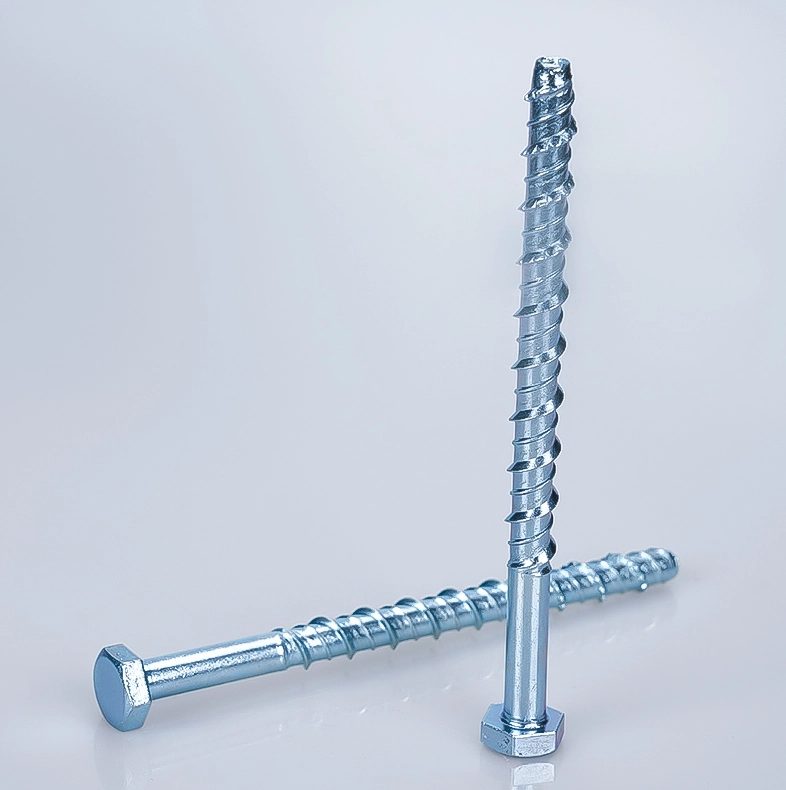
Hex Flange and Tornos de hormigón de cabeza hexagonal
For tasks with substantial metal parts or machine bases, the Hex Head excels. These bolts enable use of a wrench or powered tool to deliver strong turning force without damaging the head. They serve as essential tools in construction, appearing in bridge assembly to vehicle production.
Torx CSK Head Concrete and Masonry Screws
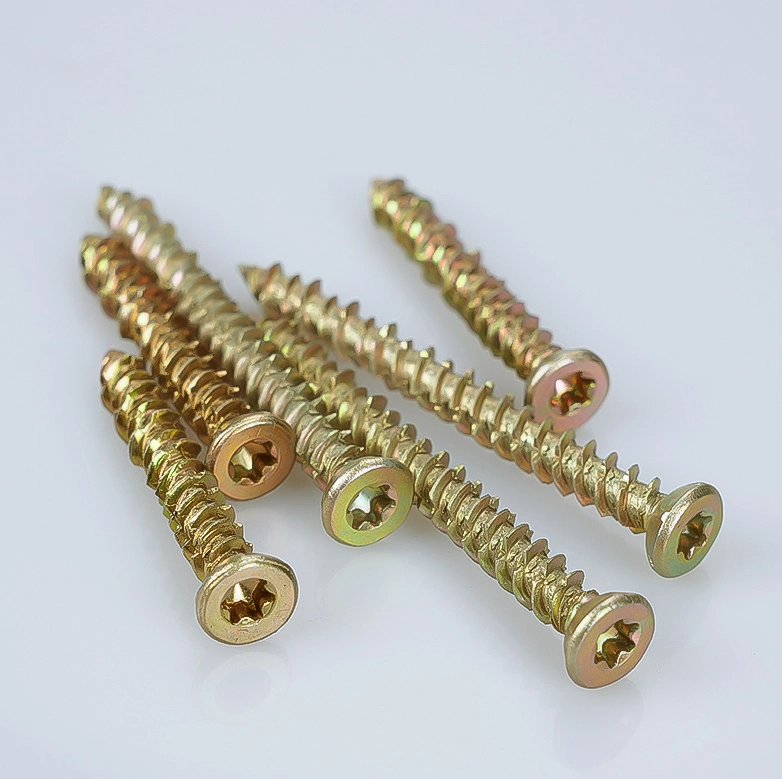
In securing duties, such as attaching aluminum or timber window frames to walls, the Torx Countersunk (CSK) head performs better. It embeds within the frame for smooth operation, and the Torx drive prevents bit slippage that could harm the frame’s surface. The focus lies on achieving a smooth, even appearance while maintaining strong hold.
Broad Utility Across Building and Decoration
These fasteners display remarkable adaptability. They secure outdoor AC unit brackets, resisting ongoing motor vibrations. Moreover, they form the norm for railings, overhangs, and sunroom frames where firmness stands as the primary concern.
Why Is Professional Quality Assurance Essential for Fasteners?
Ultimately, a bolt’s value matches its origin factory. Qewit’s British roots combined with Eastern manufacturing ensure no shortcuts with unknown alloys. Quality represents a structured approach involving reviews, evaluation protocols, and detailed records that satisfy regulations and support stable structures.
Dependable supply chains involve precise knowledge of each batch’s contents across thirty thousand product varieties. This exceeds mere delivery; it provides the expertise that underpins the whole initiative.
International Standards and Certifications
Each product series adheres to ISO 9001 procedures. For critical industrial tasks, clients may obtain 3.1 certifications, Initial Sample Inspection Reports (ISIR), or complete Production Part Approval Process (PPAP) at level 3. This openness fosters confidence in worldwide commerce.
Comprehensive Batch Testing Facilities
Prior to dispatch from the center, items face thorough examination. This covers tools like Plating Thickness Testers for rust resistance and Tensile Strength Testers to verify bolts endure without breaking. On-site availability ensures issues receive re-evaluation and documented video proof, rather than dismissal.
Technical Support and Bespoke Services
At times, standard DIN 933 or 931 options fall short. Then, a collaborator capable of producing custom items from sketches or prototypes proves invaluable. From specialized coatings such as Geomet or Magni to visual sorting for accurate orders, the offerings tailor the fastener to the client’s exact demands.
Preguntas frecuentes
Q1: Can I reuse concrete screws if I need to move a bracket?
A: Yes, unlike expansion anchors, concrete screws are detachable and can often be reused. However, the anti-loosening effect might be slightly reduced after the first use, so it’s always best to check the internal threads of the hole for wear.
Q2: Do I need to pre-drill a hole for every masonry screw?
A: Generally, yes. While some “self-drilling” screws exist for light metal, concrete is too dense for a screw to create its own hole from scratch. You must drill a pilot hole so the specialized cutting threads can do their job without the screw snapping from excessive torque.
Q3: What is the best finish for outdoor concrete bolts?
A: For anything exposed to the elements, Hot-Dip Galvanized (HDG) or Zinc Flake coatings like Geomet are the top choices. These offer much thicker protection against rust compared to standard bright zinc plating, which is really only meant for dry, indoor spots.


