

CATEGORÍAS
Etiquetas
304 vs 316L Stainless Steel Tube: Grade, Weld and Purchase Checks
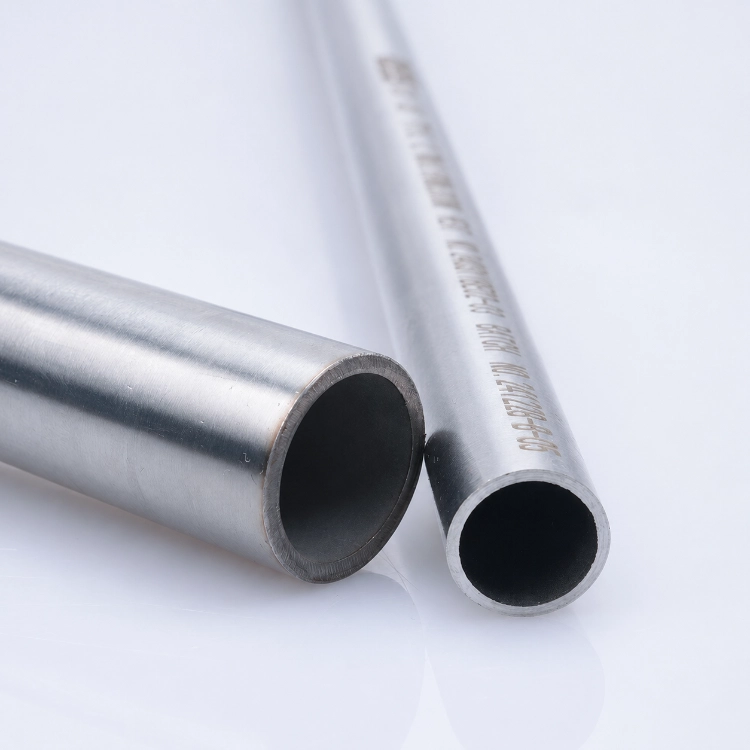
Publicado: November 12, 2026
Categorías: Noticias
When a stainless steel tube enquiry says only “stainless, polished,” I send it back for detail. That description leaves the grade, manufacturing route, wall basis and inspection open. Two tubes can look identical on a pallet and behave very differently after welding or months beside salt water.
The useful selection starts with the fluid, environment and fabrication work. Then I put the answer into a purchase description that can be checked at the mill, warehouse and receiving dock.
304 and 316L answer different exposure questions
On a drawing, 304 often appears as 1.4301 or UNS S30400. Qewit’s October notes call it 18-8 austenitic stainless, with no molybdenum and a PREN near 18–20. It is widely used indoors, in low-chloride conditions, fresh water and general HVAC work.
316L is commonly identified as 1.4404 or UNS S31603. It contains roughly 2–3% molybdenum and has a low carbon limit of 0.03% in the supplied material. Its stated PREN is around 24–26. That makes it the usual candidate to review for coastal salt, pool areas, brine, chloride-bearing process media and hygienic welded lines.
Qewit’ s stainless steel pipe and tube page lists 304 and 316L among available grades. The grade name is only the first control point. The ordered specification, dimensions, finish and test documents still need to be written down.
Chloride exposure needs a real number
“Near the sea” and “clean water” are not engineering values. My first questions are blunt: how much chloride, how hot, how often wet, what cleaner, and can dirt or salt sit there? The supplied notes mention below 200 ppm chloride at room temperature as a general 304 reference. I do not turn that number into a guarantee. Temperature, crevices, deposits and poor cleaning can change the result.
316L usually gives more margin in chloride service because of its molybdenum. It can still pit or suffer crevice attack in severe conditions. Warm chloride trapped under a clamp is a nasty little pocket. It is nothing like indoor tube that gets washed and dries out. If the exposure is uncertain, I ask the project corrosion engineer rather than upgrading by habit.
The material also notes that 316L is commonly priced above 304, sometimes by 30–50%. That is a market range from the customer material, not a quotation or fixed premium. Actual offers move with nickel, molybdenum, size, wall, finish, order weight and paperwork. Buy the required grade, then compare current offers on the same specification.
Qewit’ s grade comparison article gives a quick view of common stainless choices. On the PO I write the exact grade beside its ASTM/ASME or other agreed product specification.
What seamless and welded really change on the order
Seamless production starts with solid stock, then pierces or extrudes it. There is no long weld line down the tube. Welded tube starts flat, is formed round and joined along one seam. That route changes what sizes are easy to buy, the tolerances, the cost and where inspection should look.
Where seamless earns attention
In the October notes, seamless is the route to review for higher pressure, heat and tougher corrosion duty. It also gets attention when hard cycling makes a longitudinal seam one more variable the engineer does not want. The word seamless is not a pressure rating. Grade, wall, product standard, heat treatment, size and tests still decide whether the tube belongs there.
Some heavy walls and service conditions simply point to seamless as the practical source. But I would not pay for it by reflex on a handrail or an ordinary low-pressure utility run. That can shrink the supplier list and solve nothing.
Where welded tube makes sense
Welded tube turns up everywhere in general transfer lines, frames, decorative work, HVAC and plenty of medium- or low-pressure jobs. Starting from strip can give very steady dimensions; in some sizes, the welded option comes with tighter control. The weld is not automatically a defect. It is a feature that must be produced and inspected to the ordered specification.
For corrosion or cycling, my inspection moves straight to the seam, its heat-affected strip and the condition of the bead inside. Will the shop bend it, flare it, polish it or make orbital welds? I put that on the RFQ. One shop sample often tells us whether the seam and finish survive the planned operation.
Nominal wall and minimum wall are different orders
Wall thickness causes expensive misunderstandings. “Nominal wall” allows the variation defined by the specification around a named value. “Minimum wall” means the finished tube cannot fall below the stated wall where the requirement applies. I spell out the basis rather than leaving the mill to guess.
OD, wall and length each get a unit and an allowed variation. Pipe orders may use NPS and schedule. Tube buyers more often write an actual OD × wall. Mix those systems in one line and somebody will read it the wrong way, unless the governing specification settles it.
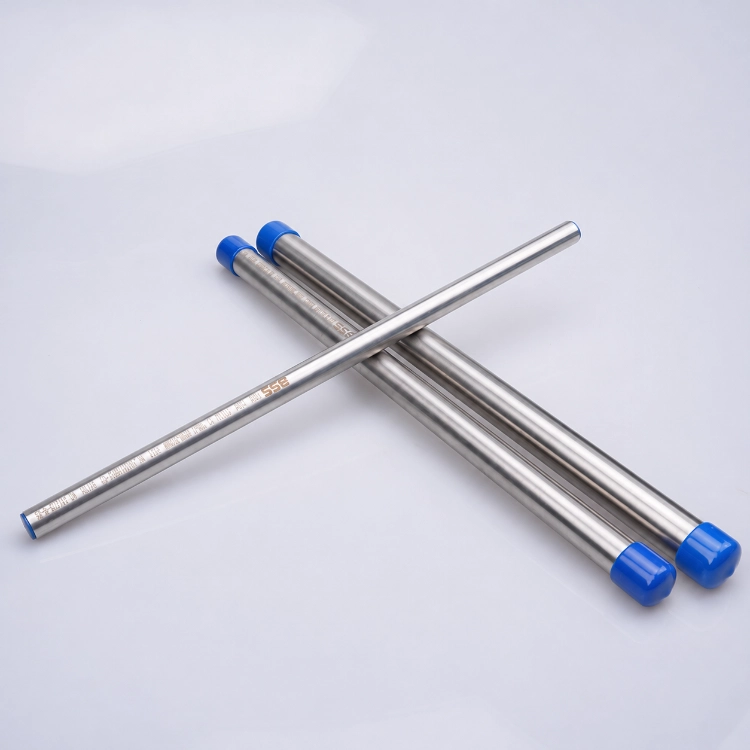
The cut condition matters too. I state square cut or bevel, deburring, end caps and how much length variation is acceptable. On hygienic and instrument lines, I spend as much time on the bore and cleanliness as the outside polish. A bright outside tells me nothing about the bore.
Put traceability and tests into the PO
For an overseas order, my material line pairs the UNS grade with its ASTM/ASME product specification, or uses the relevant EN grade and standard. A trade name by itself does not make the line buyable.
EN 10204 3.1 and 3.2 are different document arrangements, not two versions of the same PDF. The PO names the one required before the mill starts. I follow the heat number from the tube or bundle tag back to its certificate. If the processor cuts the bundle, we agree how each new piece keeps its identity.
Nondestructive testing is another field to write, not assume. Method, coverage, acceptance limit and report format all come from the product specification and project requirement. PMI is useful when alloy mix-up is a real risk. It still does not replace the material certificate or the other ordered tests.
Qewit’ s downloads page is useful for reviewing available company and test information. For the delivered tube, ask for the exact batch documents listed in the order.
Shipping protection is part of tube quality
Long stainless tubes can arrive with good certificates and damaged surfaces. My packing note covers bundle weight, timber support, lifting points, end caps and moisture protection. For a sea shipment I add salt contamination and wet wrapping to the receiving checklist. Keep the stainless clear of carbon-steel grinding dust and filthy forks or slings.
Before anyone breaks a bundle, I compare its marks with the packing list and certificate. Next come the ends, dents, scratches, water marks and caps. For polished tube, keep an approved sample. ‘Mirror’ and ‘brushed’ mean different things to different shops.
I keep RFQ clarification messages with the order. A proposed change of grade, wall basis, test route or finish comes back to me in writing. A silent substitution can hide in a revised quote when ten lines look almost alike.
Questions buyers ask before ordering
When is 316L worth choosing over 304 tube?
316L brings useful extra margin in many chloride settings. For indoor, low-chloride and ordinary service, 304 often remains the sensible grade. Choose after checking the medium, heat, cleaning routine and shop work. The higher alloy cost should solve a defined exposure problem.
Does seamless tube always handle more pressure than welded tube?
Not from the word “seamless” alone. Pressure suitability comes from the product standard, grade, size, allowable stress, workmanship and ordered tests. Compare products that comply with the same stated design conditions.
Which paperwork belongs with a stainless tube order?
Start with the contract’s material certificate—often EN 10204 3.1 or 3.2 where that framework applies. Add heat traceability and any specified NDT or PMI reports. Make sure every requested record can be linked to the delivered bundle.
Send a complete tube description for quotation
Send Qewit the grade, governing specification, seamless or welded route, OD, wall basis, length, tolerances, finish, end condition, test scope, document type and packing requirement. I also describe the fluid and the shop operations whenever they influence the choice. That information makes competing quotations comparable and gives incoming inspection something concrete to verify.


